


How a WMS can support a data-driven digital transformation

Simon Edward • 30 March 2026

Share this article

Want to take your warehouse-based business into the fast lane? Find out how a WMS can support your digital transformation.


Want to take your warehouse-based business into the fast lane? Find out how a WMS can support your digital transformation.

These days, businesses sit on huge piles of data – and that means every business, from conglomerates to corner shops.


In one sense, this proliferation of data is a source of stress. After all, a data breach or data leak could lead not only to reputational damage but also to a hefty fine under GDPR.


But in another sense, these heaps of data are a goldmine. Put to work, data can help you make decisions relating to every aspect of your business – from sales to marketing, from R&D to equipment maintenance.


Of course, this is nothing new. Businesses have always had reams of data they can analyse and implement. The difference is that nowadays data is analysed and implemented by cutting-edge tech.


Whether it's AI, IoT sensors or data analytics, the marriage of data and advanced tech is driving digital transformation.


Above all, this means a paradigm shift from gut feelings to evidence-based decision-making. Demand forecasts, picking path optimisation and more can be fine-tuned with number crunches, not hunches.


All this has the potential to improve customer satisfaction and bring them back to your company for more.

So, where does a warehouse management system (WMS) fit into all this? It starts and ends with visibility.


How can a WMS support your digital transformation?

A cloud-based WMS gives warehouse leaders real-time visibility into all aspects of their warehouse operations – from picking to packing, from replenishment to returns.


There's a reason these kinds of WMS are often referred to as a "single source of truth". They give you a dashboard from which you can look at your stock and sales. That data can then be analysed and turned into actionable insights.


Automation increases operational efficiency across the board. Workflows are optimised, from picking paths to stock levels.

A WMS lets you integrate your existing systems, whether that's data from legacy systems or more modern solutions, such as barcode scanners and voice-picking headsets.


Your approach to equipment maintenance becomes proactive, not reactive. This is because a WMS can be hooked up to sensors attached to your equipment that tell you when to schedule essential maintenance.


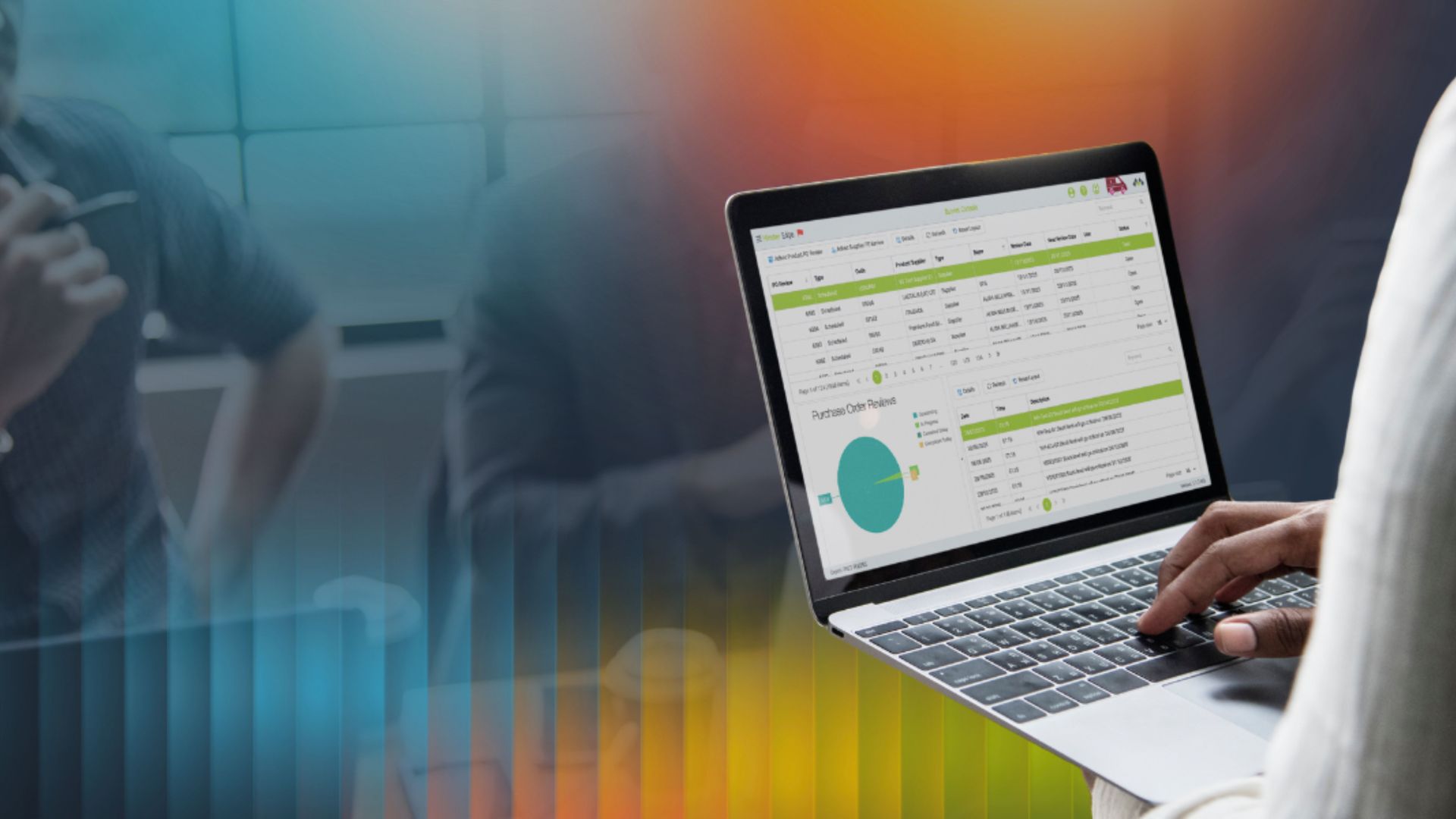
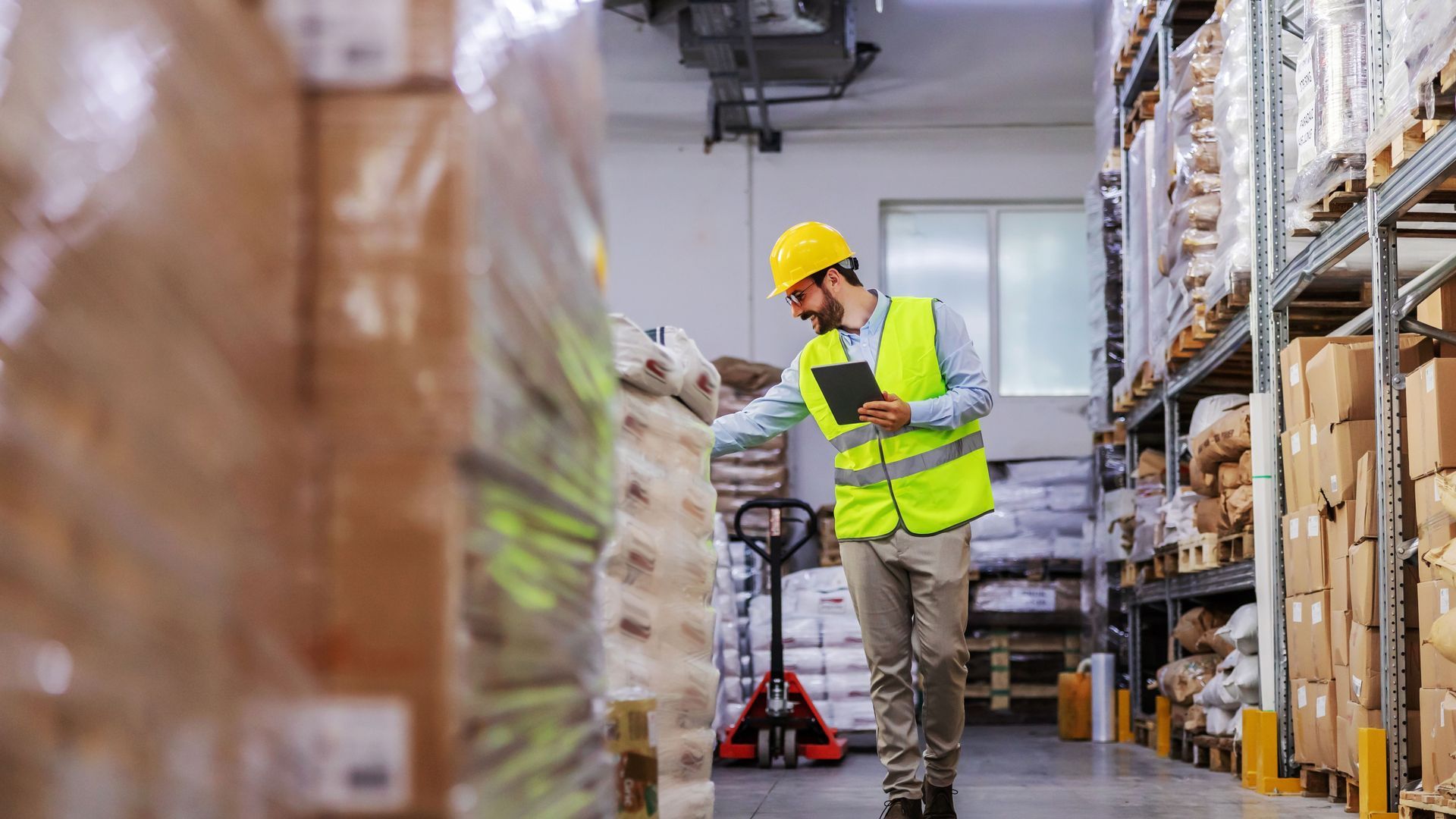
Picture of someone using Minster software in a warehouse.

This way, you can keep all your gear in tip-top condition without disrupting the day-to-day workings of your warehouse.


In the old days – and these are more recent than you might think – data had to be analysed by third-party consultants or internal experts. The findings could be valuable, but they were almost always slow.


All that is a thing of the past now that cloud-based WMS solutions come with advanced analytics and forecasting. With a few clicks of the mouse, you get highly accurate, highly detailed insights into your operations.


These are sometimes linked with digital twins – virtual replicas of the warehouse that can be experimented with in a safe sandbox environment. This lets you try out new approaches to inventory management without disruption to your day-to-day operations.


Data for customers as well as warehouse teams

It's not just warehouse managers who benefit from improved data storage and analysis. Customers, too, get a better experience when interacting with your business.

This is because some WMS solutions come with a dedicated client portal. This is an online portal where they can track every stage of the transaction.

This adds value because it increases customer trust – and, in turn, encourages repeat custom. But there's more to it than just that. It also brings your business closer to customer expectations – customers who are now used to tracking their parcels on courier sites.


It's a great example of how digital transformation isn't a purely technical affair and does more than just satisfy the IT department. It has tangible benefits for customers, too – and when customers are happy, profits are likely to increase.


Digital transformations left, right and centre

A WMS can support data-driven digital transformation in distinct but overlapping ways.

Manual inventory checks are transformed into real-time tracking. Gut feelings are transformed into real-time analytics.


Human error is reduced as processes are automated and optimised. Bottlenecks are precluded rather than prevented. And inefficiencies are transformed into efficiencies at all stages of your inventory's journey from warehouse to doorstep.


Picture of a delivery driver.

What characterises a data-driven digital transformation?

Data-driven digital transformation is a concrete reality that can sometimes sound rather abstract. To drive home how tangible its benefits are, let's look at its four key characteristics.


1. Actionable insights

First, it's characterised by actionable insights. This is where reports are generated quickly with just a few clicks of the mouse. The data they're generated from is accurate and visible. The final findings can be actioned without needing to bring in expensive experts.


2. Cutting-edge technology

Secondly, it's built on cutting-edge technologies: in particular, AI and big data analytics. This surpasses human cognition and allows information to be processed on a large scale – and quickly, too.


3. A culture shift

Thirdly, it necessitates a shift in workplace culture.


Pre-transformation, decisions are likely to be made on the basis of gut feelings and useful but partial data. But once a cloud-based WMS has transformed a warehouse, those gut feelings get replaced by objective, machine-learned insights. This gives warehouse managers confidence that their decisions are based on facts, not fancies.


4. Comprehensive benefits

Finally, a data-driven digital transformation brings benefits that can be felt from management all the way down to the customer.


Accuracy is increased – you can achieve up to 99.98% picking accuracy with our voice integration. Mistakes are reduced, making for happier customers and taking the pressure off customer support. Meanwhile, staff know they're working efficiently and not wasting work time.

How we can help

Here at Minster WMS, we provide businesses of all shapes and sizes with highly capable, cloud-based WMS software backed by best-in-class technical support.


With our solutions, you can expect end-to-end visibility, near-perfect accuracy and highly detailed analytics – three benefits that can form the bedrock of any digital transformation. And because you can be up and running in hours, not weeks, you can start reaping the benefits straight away.


Keen to see how our solutions can support your data-driven future? Book a demo with our UK experts today.

Recent Posts

What's the best warehouse management system for your business? Explore your options
by Simon Edward 27 March 2026
What's the best warehouse management system for your business? Explore your options in our no-nonsense guide.
Don't know your FIFO from your LIFO? Get to grips with essential warehouse management terminology
by Simon Edward 23 March 2026
Don't know your FIFO from your LIFO? Get to grips with essential warehouse management terminology in our glossary.
More and more warehouses use robotics for core activities. Find out the differences they can make.
by Simon Edward 20 March 2026
More and more warehouses use robotics for core activities. Find out the differences they can make.
Want to make managing inventory more efficient? Explore specific, measurable and achievable KPIs
by Simon Edward 16 March 2026
Want to make managing inventory more efficient? Explore specific, measurable and achievable KPIs to get you there.
Want to avoid inventory loss? Find out how rework and refurbishment can help
by Simon Edward 13 March 2026
Want to avoid inventory loss? Find out how rework and refurbishment can help – and how a WMS plays its part.
Want to take your eCommerce brand to the next level? Found out how changes to your warehouse
by Simon Edward 9 March 2026
Want to take your eCommerce brand to the next level? Found out how changes to your warehouse can help fuel growth.
We're joining other innovators in warehousing and logistics at IntraLogisteX 2026 in Birmingham.
by Simon Edward 6 March 2026
We're joining other innovators in warehousing and logistics at IntraLogisteX 2026 in Birmingham. Find out where we'll be and what to expect.
Is inventory management a burden to your business? You might want to consider VMI. Learn how
by Simon Edward 27 February 2026
Is inventory management a burden to your business? You might want to consider VMI. Learn how it works and how it might benefit you.
To stock a warehouse effectively, you need a sense of future demand. Find out how
by Simon Edward 23 February 2026
To stock a warehouse effectively, you need a sense of future demand. Find out how expert opinion and warehouse management systems can help.
The last-mile problem is a head-scratcher for businesses that deal with deliveries.
by Simon Edward 20 February 2026
The last-mile problem is a head-scratcher for businesses that deal with deliveries. Discover what it is and 6 tools that can help you solve it.
Show More