8 types of warehouse racking systems explored
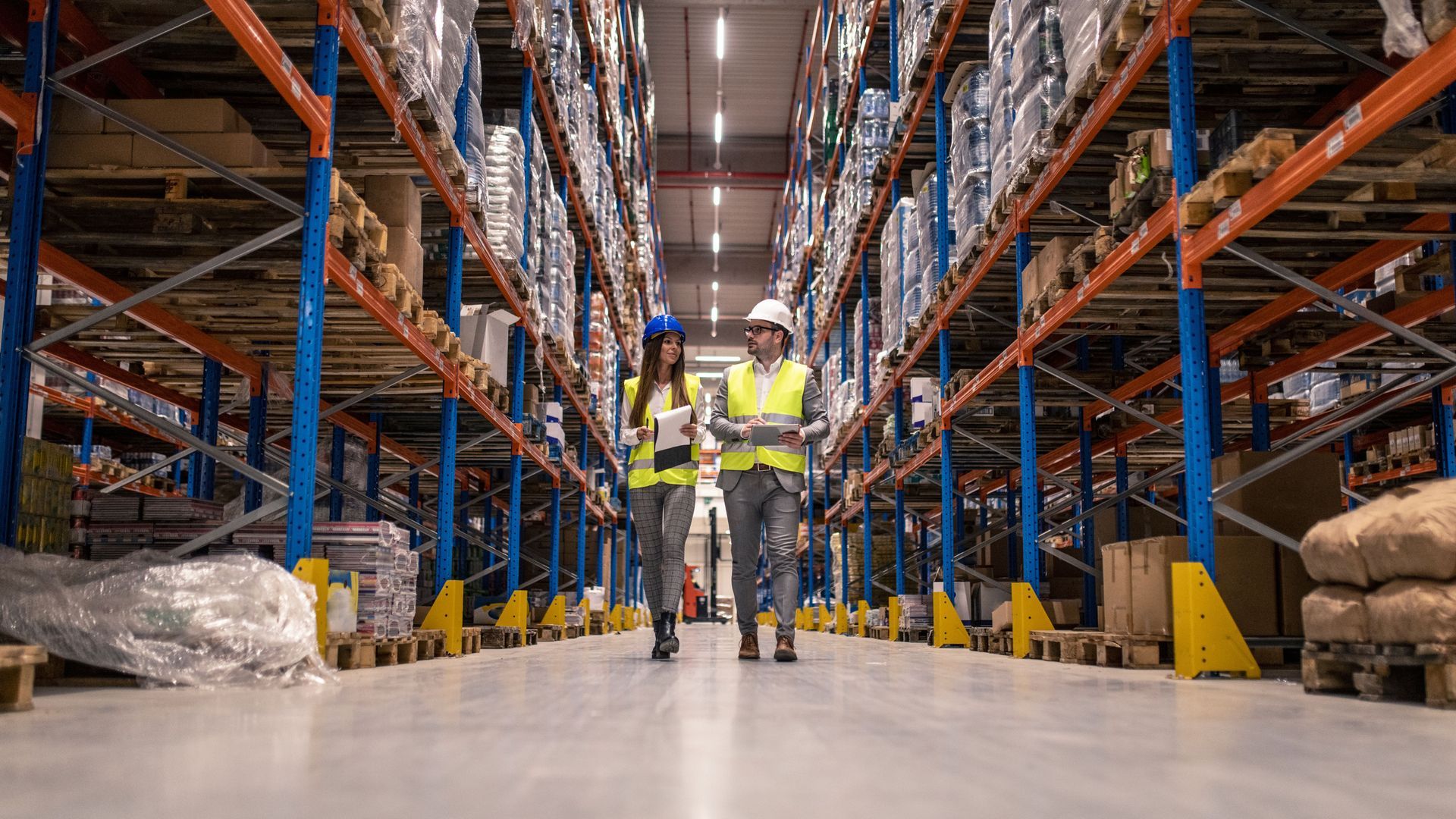
Are you shopping around for warehouse storage? Discover the benefits and considerations that come with 8 common warehouse racking systems.

Warehouse racking is about so much more than having somewhere to store inventory. Your choice of warehouse racking affects everything from your storage capacity and inventory security to inventory retrieval and order fulfilment.
Look into it, however, and you'll soon find there are a wide range of warehouse racking systems. Choosing the right one for your warehouse can be a surprisingly tall order (pun intended).
As so often, the right choice for you depends on one thing – you. And by that we don't mean your taste in shelving. Rather, we mean the storage requirements, business goals and existing setup of your warehouse.
In this article, we investigate eight kinds of warehouse racking systems to help you make the right decision. But before we do, why is warehouse racking important in the first place?
Why is warehouse racking so important?
Warehouse space always comes with a price tag, so you want to get the best bang for your buck. Racking systems are important in this respect because they help you maximise the space you've got and put off relocations, expansions and other logistical headaches.
They also play a key role in boosting operational efficiency. Think of your warehouse as a supermarket. The less clear the layout, the longer it takes to get round. This travel time for pickers directly impacts turnaround times and overall productivity.
Then there's the ever-present question of safety. Stacks of heavy goods are a liability. Sturdy and secure racking systems, by contrast, help ensure safety and compliance.
Compliance protects your reputation. Warehouse racking systems protect your goods, too. Stock left lying around on the warehouse floor can be easily damaged, losing you money and – potentially – customers in the process.
Last but not least, warehouse racking is important because clear racking simplifies stock rotation. This is an essential tool when managing time-sensitive SKUs and fluctuating demand.
Eight types of warehouse racking systems

1. Adjustable pallet racking (APR)
This is the most widely used system – and for many, the most cost-effective.
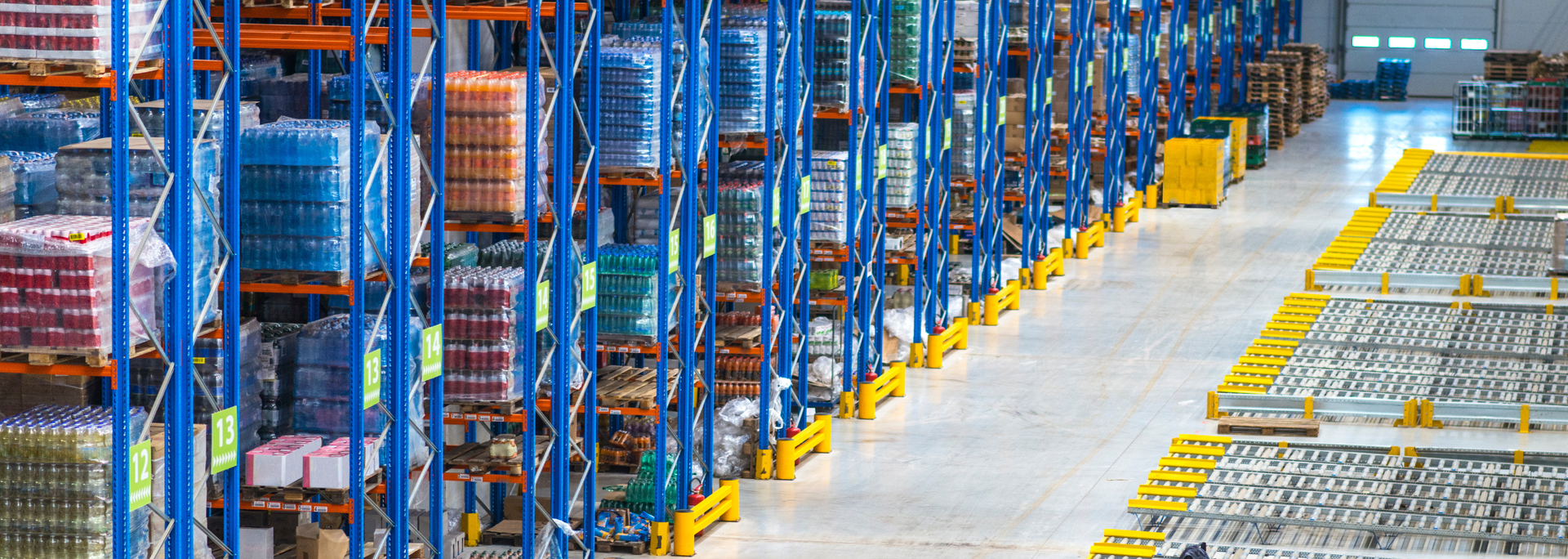
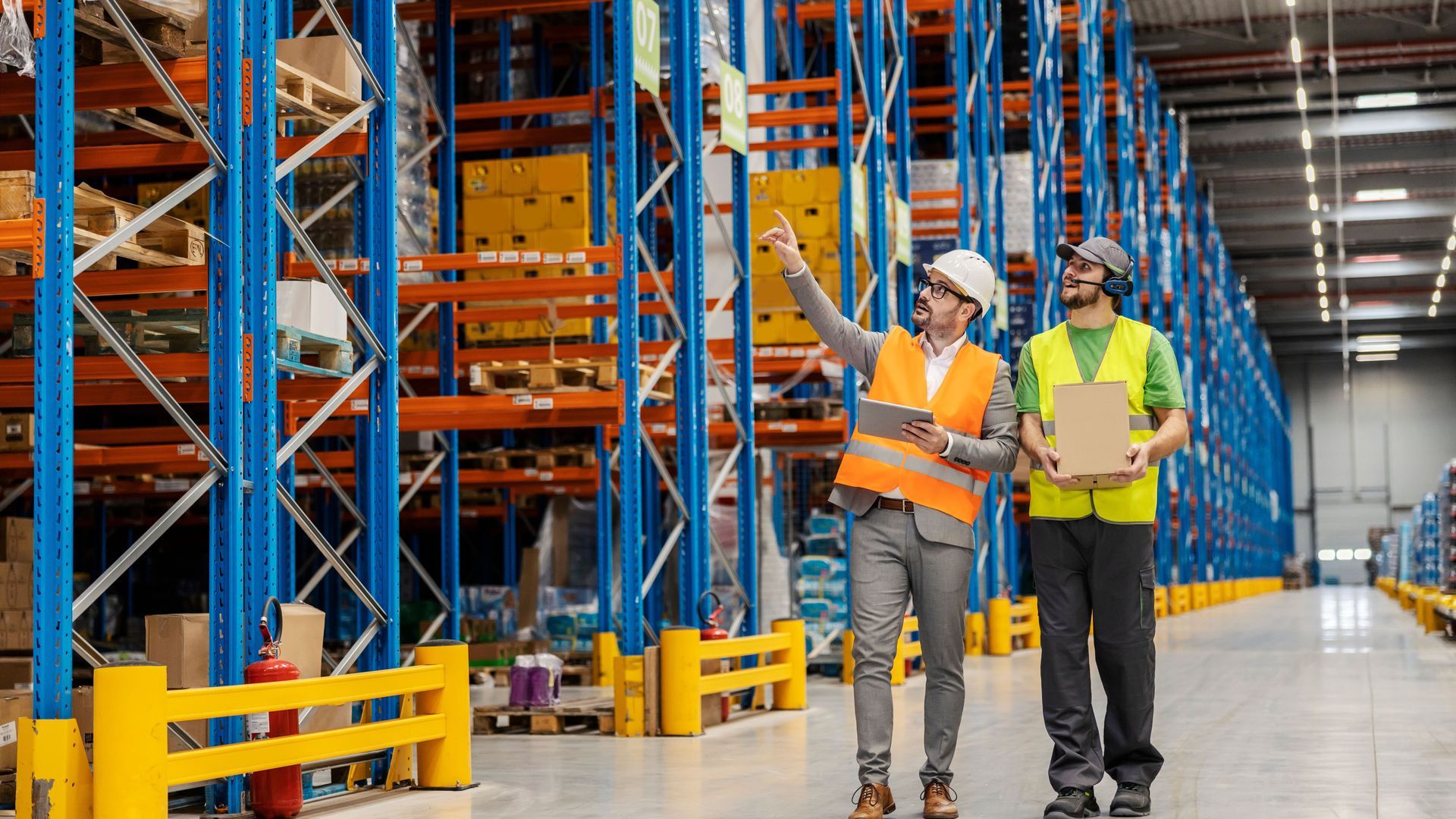
APR systems consist of vertical uprights and horizontal beams. They can accommodate pretty much any pallet, and each pallet can be accessed directly without moving any other pallets.
It's frequently used in general warehousing and more specifically in retail stockrooms and warehouses that require constant access to a range of SKUs.
2. Double-deep pallet racking
This is a variation on APR that stores pallets two deep instead of one. The main advantage of this over standard APR is that it reduces the number of aisles needed.
Double-deep pallet racking is ideal for warehouses that need more storage density but aren't ready to switch to automated solutions. It does, however, require a special kind of double-reach forklift.
3. Drive-in and drive-thru racking
We now move on to high-density racking systems. Drive-in and drive-thru racking remove work aisles, allowing forklifts to drive into the rack structure and load or unload pallets.
Drive-in racking operates on a last-in, first-out (LIFO) basis. This is ideal for seasonal goods or large batches of a single SKU.
Drive-thru racking, by contrast, enables the forklift to enter from both sides of the rack. This makes it possible to use first-in, first-out (FIFO) inventory management.
4. Push-back and pallet flow racking
These are two kinds of high-density racking systems. They rotate stock automatically, increasing stock-rotation efficiency.
Push-back is a kind of LIFO racking system. Pallets rest on nested rolling carts. Each new pallet pushes the previous one back on an incline.
Pallet flow racking enables high-efficiency, high-throughput operations. It consists of gravity rollers that let pallets slide down an incline.
5. Cantilever racking
Cantilever racking differs from other kinds of pallet racking in that it has an open front with horizontal arms reaching outwards.
It's mostly used to store long, bulky or irregularly shaped items. Common inventory types include timber, pipes, steel bars and furniture.
6. Very narrow aisle (VNA) racking
As the name suggests, VNA racking narrows the aisles between racks and, in doing so, increases their total storage capacity.
Like double-deep pallet racking, it requires specialised equipment – in this case, guided turret truckers or narrow-aisle forklifts.
7. Mobile racking
Mobile racking involves mounting racks on motorised carriages or tracks. They can then move laterally and open a single aisle only when required.
It's especially useful in small warehouses where floor space needs to be maximised. In cold storage facilities, meanwhile, it lowers energy costs by minimising the volume of air that needs refrigeration.
8. Mezzanine systems
Mezzanine racking systems are multi-level storage platforms built on heavy-duty pallet racks or shelving frames. They're accessed by steel walkways, doubling or even tripling the amount of vertical space in use.
How does a WMS help with racking?

A warehouse management system (WMS) has many benefits. One is the part it plays in optimising your racking systems.
A good WMS can help maximise storage density, ensuring the correct rotation of stock and drastically reducing the time pickers spend searching for and putting away goods.
Your WMS can map your racking system and automatically tell you the best place for each incoming product. It can also automate picking routes, calculating the shortest and most efficient paths for pickers.
If you're storing and fulfilling perishable or time-sensitive goods, the WMS can enforce rules so older stock is picked before newer stock.
Finally, a WMS can be hooked up to mobile devices or barcode scanners that let pickers instantly locate items, no matter how complex the racking system.
Minster WMS is a UK-based provider of warehouse management software solutions. Explore our free resources for more industry insights and warehouse management tips.