AMRs vs AGVs: choosing the right warehouse robots
Do you know your AMR from your AGV? Explore the pros and cons of these types of warehousing robots.

The year 1953 marked many firsts. There was the discovery of the DNA double helix, the first flight data recorder and the first cans of WD40.
Meanwhile, at an electronics facility in Northbrook, Illinois, the first mobile robots were used in a warehouse. These automated guided vehicles (AGVs) ran along a fixed path, following electrical wires embedded in the floor.
Fast forward to 2026, and we're still using AGVs. Sure, the models are a little more advanced, but the principle remains the same.
We're also using autonomous mobile robots (AMRs). These self-guided machines can move goods from A to B without any need for fixed paths, magnetic tracks or, indeed, human intervention.
AMRs were first used in hospitals in the late 1980s. The first AMRs for commercial warehouse use, meanwhile, were developed and deployed by Kiva Systems (now Amazon Robotics) in the early 2000s. They were first used by Staples in 2005.
These devices are now as embedded in the warehousing world as those electrical wires in the warehouse floor. But they're not as widespread as you might imagine, with only six percent of warehouses using AGVs in 2001.
If you're thinking of investing in warehouse robotics, you may be weighing up the pros and cons of AMRs and AGVs. So, which is right for you? It all depends on your business and its goals.
What are AMRs?
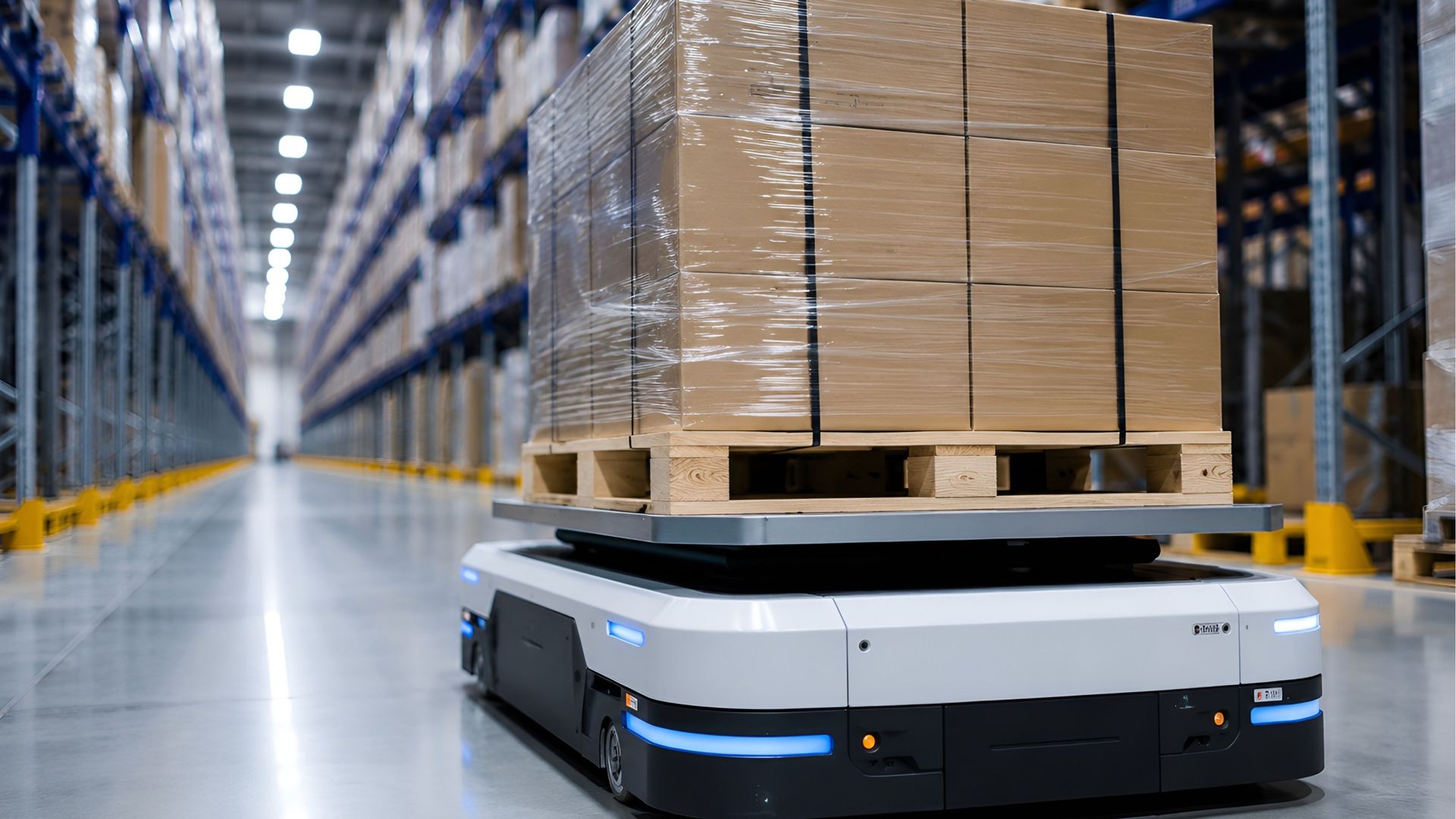
AMRs are autonomous mobile robots. These smart machines use sensors, cameras and computers to move around the warehouse – or, in other contexts, around the factory or hospital. Crucially, they don't need human supervision.
Instead, they use laser sensors and cameras for smart mapping. This technology helps them learn the layout of a room.
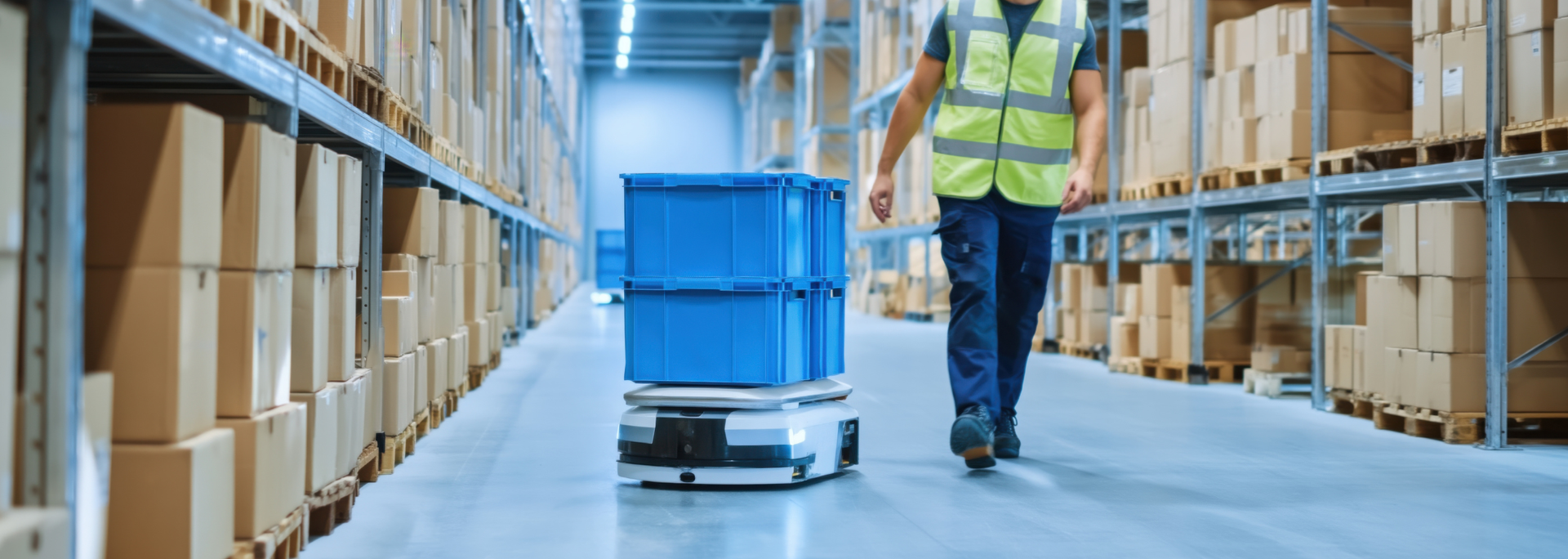
Unlike AGVs, they can move around the warehouse without wires or magnetic strips on the floor. And when they detect a person or blocked aisles, they can reroute and navigate around the obstruction.
For this reason, AMRs are ideal for warehouse environments where humans and robots rub shoulders.
In warehouses, they're used to transport heavy boxes, parts and full pallets, while in hospitals they carry supplies and medicine.
What are AGVs?
AGVs are automated guided vehicles. Like AMRs, they're driverless and portable and used in warehouses, factories and hospitals. Unlike AMRs, they must move along fixed or programmed paths.
AGVs navigate by following strips or cables laid into the floor. They use mounted laser scanners to map room dimensions, read reflectors on walls and calculate their position. They also use cameras to read barcodes and visual cues, which help them track locations.
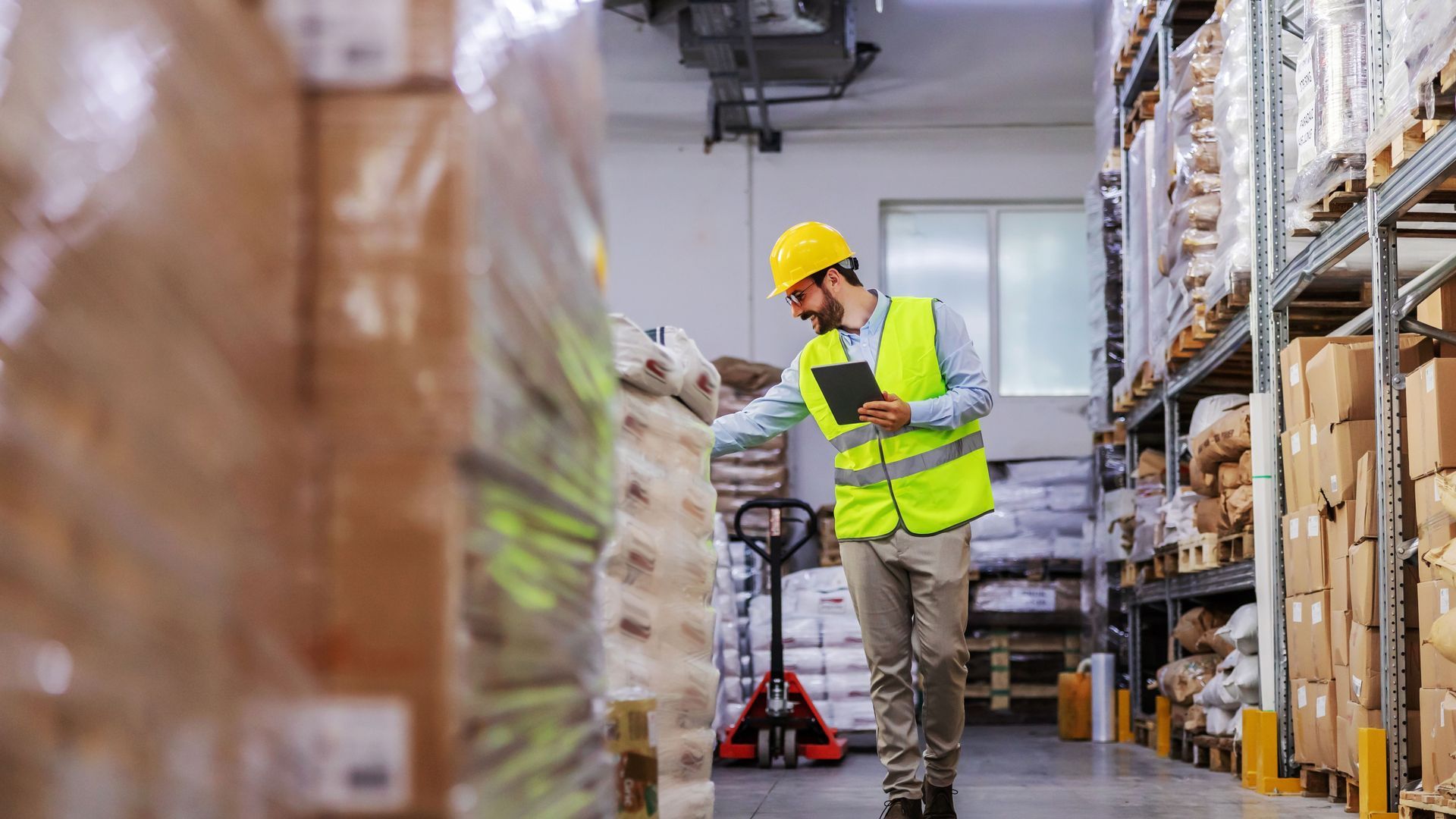
They've been used in warehouses long enough to safely coexist with humans. Their main drawback when compared to AMRs is that they stop when an obstacle blocks their path – unlike an AMR, which circumnavigates the obstacle. This can reduce throughput in busy warehouses.
AGVs are most commonly used to transport raw parts to assembly lines, move stacked pallets and – in a different context – deliver hospital supplies and medications.
Which is right for my warehouse?

Your choice of warehouse robot will hinge on two main factors: the kind of warehouse you run and the size of your budget.
AMRs suit fast-changing environments
In terms of function, AMRs are best for warehouse environments where change is a daily reality.
AMRs could be the right choice if your warehouse deals with:
- Rapidly changing inventory locations
- Seasonal spikes in demand
- Overlapping picking workflows
- Crowded aisles
These demands tend to be made in eCommerce or omnichannel fulfilment environments. In these settings, AMRs can make a big difference to goods-to-person picking, cart transport, case movement, inventory scanning and order fulfilment.
They can also help if you plan to scale up your warehouse. That's because AMRs instantly adapt to new floor layouts by updating their digital maps. There's no need for the expensive floor renovations required by AGVs in their new home.
AGVs thrive in predictable environments
AGVs tend to be best in warehouses where repetition is the name of the game.
That means AGVs can be a highly beneficial investment if your warehouse has:
- Fixed production lines
- Repetitive pallet transport
- Consistent routes
- Minimal changes in layout
Once the tracks are installed, AGVs can move pallets from receiving to storage, feed assembly lines and transport materials from workstation to workstation. It should all work like clockwork – so long as the workflow doesn't need to change.
AGVs aren't always cheaper
While AGVs may look like the budget option, they can cost you down the line – quite literally when you spend money on track maintenance.
AMRs, by contrast, require fewer warehouse modifications. This makes them faster to deploy, and they can move with the changing winds. They are, however, more expensive upfront than their track-based counterparts.
The importance of a warehouse management system for warehouse robotic
Here at Minster WMS, we supply companies in a wide range of sectors with
SaaS warehouse management systems. Our flagship products are
CORE – an entry-level solution that works right out of the box – and
EDGE, our enterprise offering.
When it comes to robotics, your WMS and robotics system have different jobs to do.
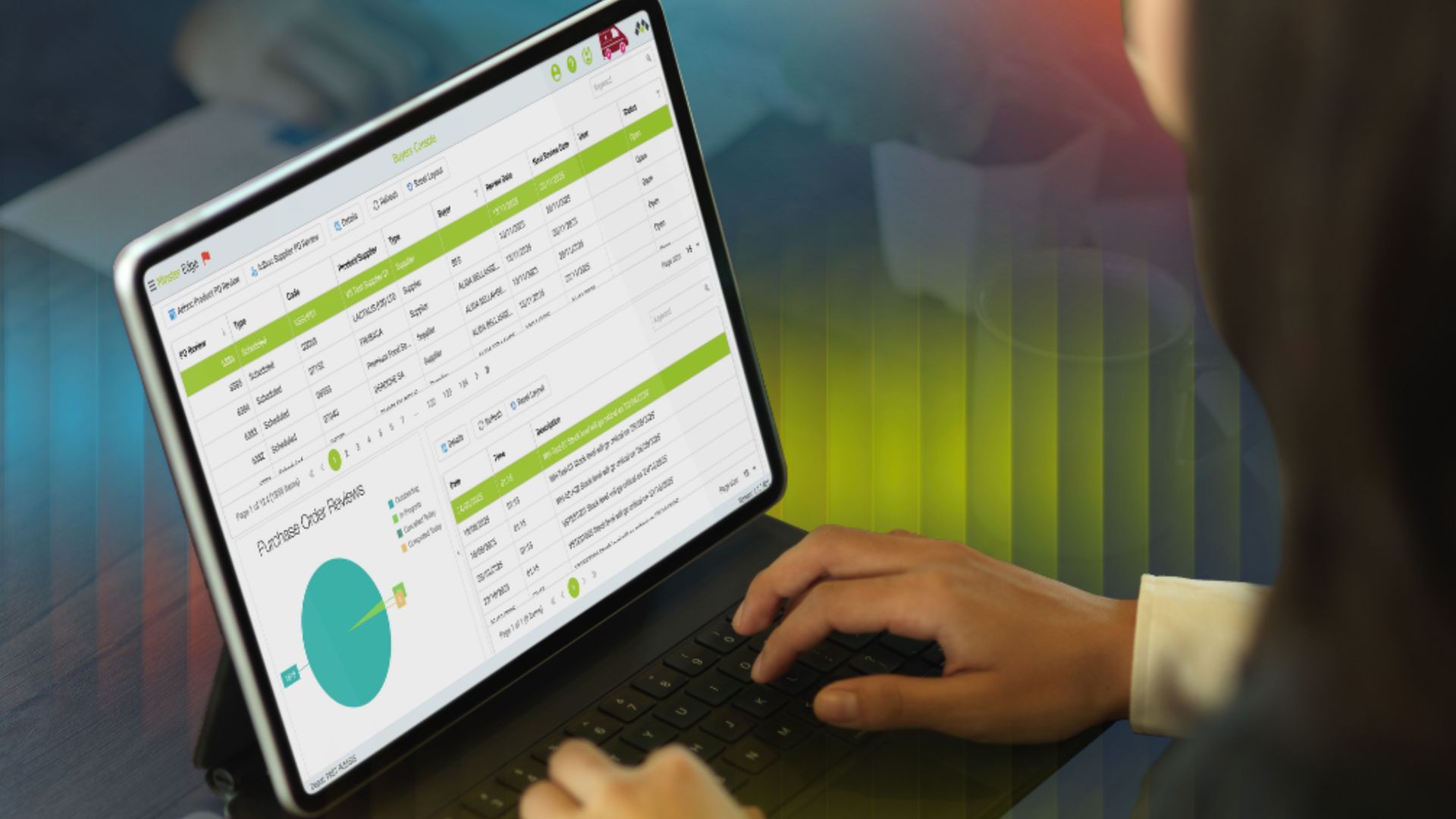
The WMS provides the operational context. It keeps track of inventory, orders and warehouse tasks, and it shares the information robots need to carry them out. The robotics system then handles the movement and control of the machines themselves.
In practice, this means a WMS can help coordinate the wider workflow while integrating with the software that manages your robots. It keeps your warehouse operations and automated equipment working from the same information. In turn, this can help you maintain visibility, accuracy and productivity as automation becomes a bigger part of your operation.
So, if you're investing in warehouse robotics, it's well worth making sure your WMS can integrate with it. For more complex, enterprise-level operations, an integration-ready solution such as EDGE can help connect your WMS with the wider technology ecosystem your operation relies on.
Want a WMS that will lead the charge as you embrace automation? Book a free demo of EDGE today.