If you run a business selling goods, you don't need us to tell you the importance of inventory management. No inventory, no customers, no profits.
But how about the importance of inventory visibility? This is an area of inventory management that's sometimes misunderstood and often neglected.
Inventory visibility isn't just about what you can see on your warehouse shelves. It's also about your inventory records – whether these exist on spreadsheets or a warehouse management system (WMS) – and how this corresponds to what's on your shelves.
From one point of view, the argument for inventory visibility is easy to make. It helps you fulfil orders and give customers what they want. Simple, right?
It's a topic, however, that's more complex than it initially appears – and the benefits of which are perhaps wider-ranging than you might think.
What is inventory visibility?
Inventory visibility means more than just being able to physically see your inventory. In a business context, in fact, it's a phrase often used to refer to good inventory visibility – a view of your inventory that's accurate, detailed and up-to-date.
Inventory visibility tells you the inventory you have, its location and its status (on the shelves? On the way to the customer? Returning to sender?)
It gives you this information in detail. With a WMS, you can see immediately how many of each item is available, which have been ordered and shipped, expected delivery dates and stock levels.
This last point is invaluable for timely replenishment. You can immediately determine which items need restocking, helping you avoid costly stock-outs, returns and lost custom.
An example
Let's say you have 1,000 purses in your warehouse. Inventory visibility gives you a granular account of the order status and location of those purses.
Without inventory visibility, you might know that 500 purses are available. With
inventory visibility, you know where they are, when more are arriving and which are being fulfilled.
And when you invest in a WMS, you get this inventory visibility in real time. When a customer buys a purse or a member of staff picks, packs or ships it, the change in status is immediately logged – and immediately accessible to the people who need to see it.
Why does inventory visibility matter?
Customer satisfaction depends on one thing: getting what you paid for. Without inventory visibility, that's surprisingly hard to achieve.
After all, you'll be hard-pressed to fulfil orders accurately and on time if you don't know:
- What inventory you have
- Where it is
- How much of it is available to sell
Inventory visibility lets you identify low stock
before you run out, avoiding all the lost custom and customers that stock-outs entail.
Conversely, it helps avoid
overstocking. You know, in detail, what you have in stock. So, there's no need to fritter money away on excess stock or oversized buffers. At the same time, you avoid the storage and insurance costs that excess stock creates.
Customers get the answers they want more quickly. This improves customer retention. After all, if you can't tell a customer whether an item is in stock, they're likely to look elsewhere.
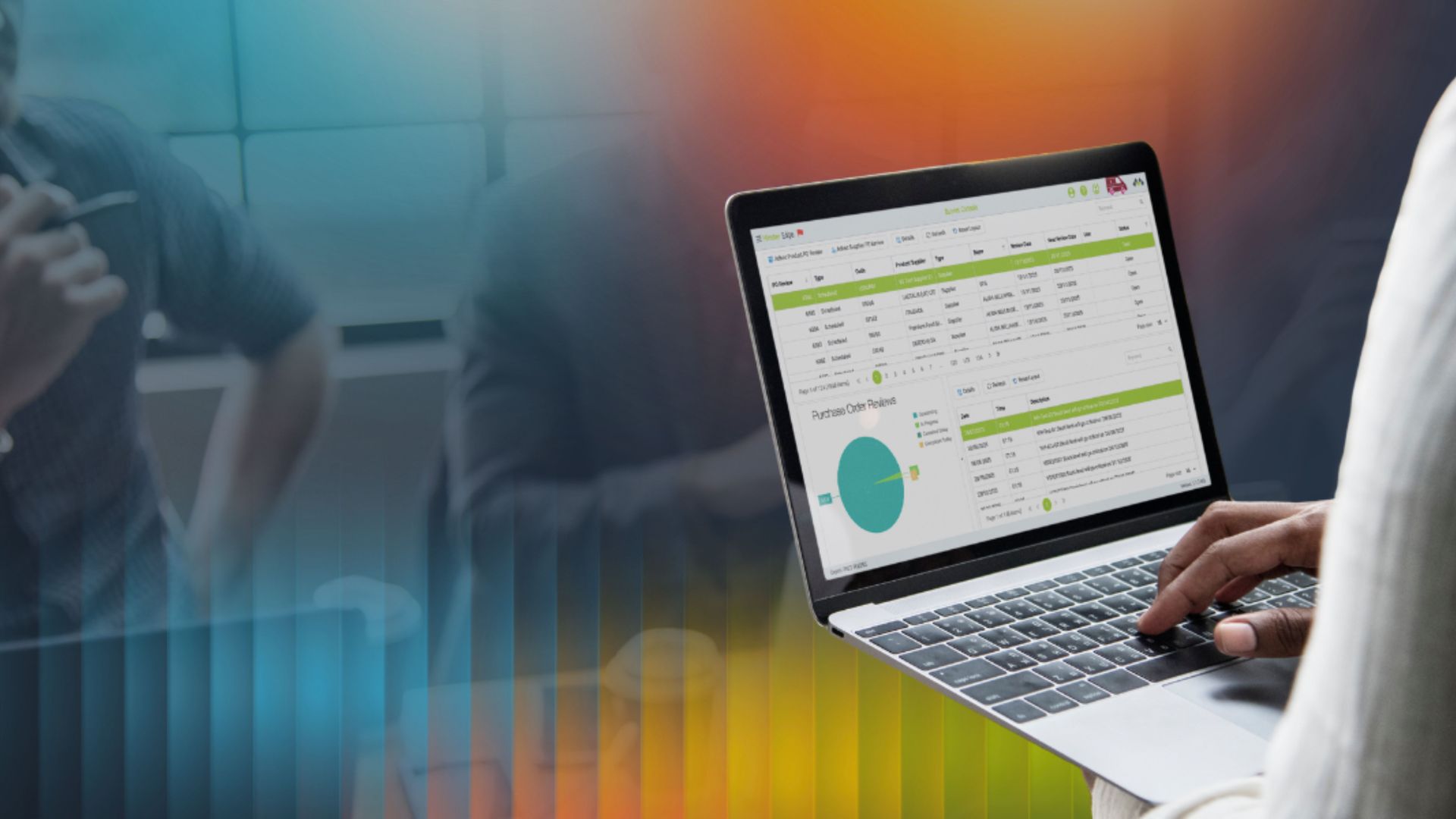
Last but not least, inventory visibility is often closely related to reporting – especially when you use a modern, cloud-based WMS to monitor your inventory.
Rather than paying a third-party consultant, your WMS can generate actionable insights with just a few clicks.
At the end of the day, inventory visibility gives you detail. It's the difference between knowing you have something in stock and knowing that you have 37 items ready to ship, 10 arriving tomorrow and two on their way back to the warehouse.
That means you can stock the right products in the right place at the right time – and get them to the right customers on time.
How to improve inventory visibility