



10 signs you've outgrown your current warehouse software

Simon Edward • 21 October 2026

Share this article

Is it time to upgrade your warehouse management system? Explore 10 telltale signs in our guide.


We've all been there. A technological fix starts to create more work than it solves. In the case of a warehouse, this could be a new scanning system or an automated process.


More often than not, however, the problem we see is that warehouse software stops being fit for purpose.


Perhaps you rely on a system built around spreadsheets. Somehow, those spreadsheets aren't enough, and staff start building shadow spreadsheets to make the first bunch of spreadsheets make sense.


Or perhaps you have a bespoke piece of warehouse management software that doesn't give you the visibility into your inventory you need. The result? Time wasted checking and double-checking the inventory on the shelves and how it corresponds to the inventory in your software.


These are just a couple of the telltale signs that it's time to upgrade your warehouse management system (WMS).


And if you do decide to make the switch, you want a WMS like ours. With Minster systems, you get end-to-end inventory visibility and accuracy, plus near-instantaneous analytics and reporting – just what you need to make data-backed decisions.


So, how do you know when you've outgrown your current warehouse software? Here are 10 telltale signs.


1. You're drowning in spreadsheets

Plenty of warehouses still rely on spreadsheets rather than dedicated warehouse management systems.

This tends to lead to document sprawl: a spreadsheet for inventory, another for replenishment, another for slotting, another for reporting, and so on.


The problem comes when there are cracks between those spreadsheets. This often leads to shift supervisors creating their own shadow systems to track inventory – perhaps using an Excel spreadsheet or Google Sheet.


It's a workaround that helps get the job done in the short term. But long-term, it creates inventory mismatches and time lost to cross-referencing and consolidating data.


If this sounds like you, it could be time to make the move and upgrade your warehouse software.

2. Accuracy is slipping


Picture of a target.


Inventory accuracy is essential to customer satisfaction. Without it, you can't give customers what they want and expect: timely, accurate delivery of the products they ordered. Instead, you lose time and money to stockouts, overstocking and refunds.

If you frequently uncover stock discrepancies and misplaced items, you may be outgrowing your current warehouse software.


Rather than letting your staff waste time manually updating the inventory, you can automate the process. This helps save time and money and improve the overall efficiency of your operations.


3. You rely on tacit knowledge

In business, the phrase "tacit knowledge" refers to the wisdom obtained through work – wisdom that's not found in the company handbook.


Tacit knowledge has its advantages. The warehouse-floor veterans know all the workarounds, efficiency drivers and secret handshakes. They know how things really work.


The problem comes, of course, when the veteran leaves and new staff take forever and a day to learn the ropes.


A modern WMS is all about cold, hard facts. It means you can make decisions based on objective data, not tacit knowledge and vibes.


4. Your software lacks flexibility

Pretty much every business wants to grow – and growth typically involves an increase in operational complexity.


Perhaps you need to add a new warehouse, new SKUs or a new picking zone. Perhaps your goods now come in different measurements, kits or combinations. Perhaps you're now selling to a new kind of client.


All these additions can be stymied by inflexible software. You need warehouse software that can absorb complexity, not spit it back at you.


5. Order volume and productivity aren't growing together

Here's the ideal scenario. You start getting more orders, and your operations rise to the challenge, growing more productive the more you sell.


Here's the dreary reality. You start getting more orders and your productivity plummets into a pit of bottlenecks, stretched resources and inefficient operations.


A software upgrade can't solve this problem. However, it can signal you've outgrown your current software. You need tools that boost productivity while accommodating increasing demand.

6. You can't see your inventory in detail


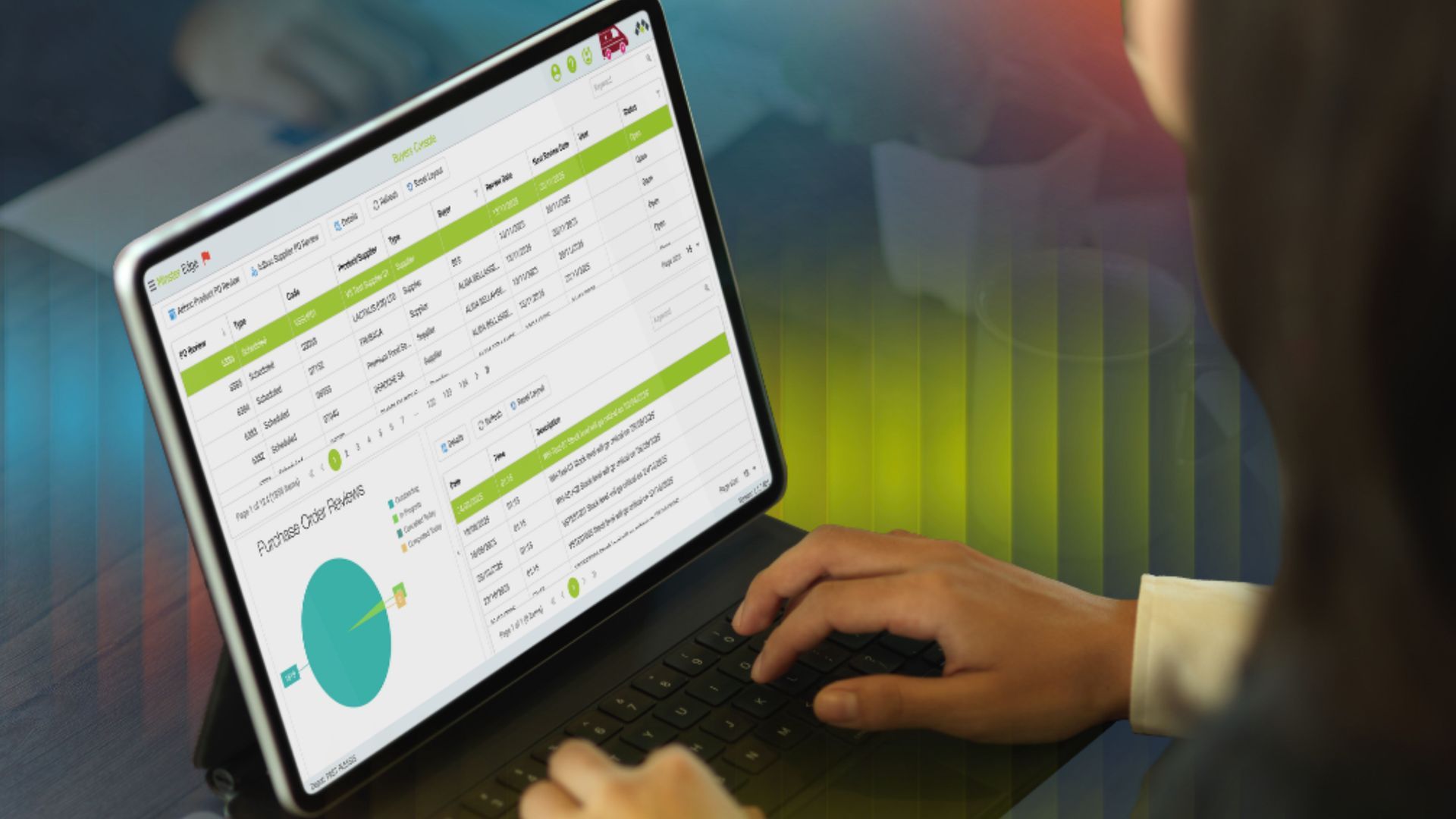
Picture of someone using Minster software in a warehouse.

This is a big one. Are you regularly asking questions about your inventory and receiving vague or contradictory answers? Then you've got an inventory visibility problem.


Ideally, your inventory should be instantly accessible 24 hours a day. If there are bottlenecks, backlogs or stockouts, you need this information at your fingertips.


This is one of the biggest benefits of a modern cloud-based WMS. It gives you real-time visibility into your inventory in all its complexity. The status and location of each item are updated in real time, so you know you're looking at your actual inventory, not an approximation.


8. Integrations are an obstacle

Warehouse software often needs to be integrated with other software. These integrations might handle accounting, order fulfilment through eCommerce platforms, couriers, scanning methods or customer feedback.


If your current warehouse software can't handle these kinds of integrations, chances are that a staff member is having to fix the mistakes that fall through the cracks. That's a sure sign you should invest in a modern WMS.


9. You're constrained by your warehouse software

Your system should be able to support changes to your warehouse processes. If it acts as a barrier instead, it's likely to have a chilling effect on your overall growth and efficiency. Warehouse software should enable, not hinder.


10. All your insights are in retrospect

Your warehouse software tells you what worked yesterday. Unfortunately, you've no idea how things are likely to pan out tomorrow.


This is a telltale sign you've outgrown your software. You need an up-to-the-minute WMS that gives you actionable insights on tap.


How Minster WMS can help

If your warehouse software is creating workarounds, blind spots or bottlenecks, it may be time for something built to grow with you.


Minster WMS gives you real-time inventory visibility, flexible integrations and live operational data.


Together, these features help you replace spreadsheets and guesswork with a system that keeps pace as your warehouse becomes more complex.


Whether you need a straightforward solution for a growing operation or a more configurable system for enterprise-scale fulfilment, CORE and EDGE are designed to support the next stage of your growth.


Get in touch with Minster WMS today to book a demo or for practical advice on choosing the right system for your warehouse.


Recent Posts

One of the under-sung benefits of a WMS is its capacity to reduce waste. Learn more
by Simon Edward • 21 October 2026
One of the under-sung benefits of a WMS is its capacity to reduce waste. Learn more in our industry guide.

Middleware enables different pieces of software to communicate and share data.
by Simon Edward • 12 October 2026
Middleware enables different pieces of software to communicate and share data. Find out what that means in practice.
Integrating different platforms can unlock new efficiencies.
by Simon Edward • 9 October 2026
Integrating different platforms can unlock new efficiencies. In this article, we explore how you can link your ERP, WMS and eCommerce platforms.

Every business needs inventory visibility. Find out why – and how
by Simon Edward • 5 October 2026
Every business needs inventory visibility. Find out why – and how a warehouse management system can help.

Wholesale warehouse fulfilment presents unique challenges and requires unique solutions.
by Simon Edward • 28 September 2026
Wholesale warehouse fulfilment presents unique challenges and requires unique solutions. Explore them in our industry guide.

When managing inventory, it's important to calculate safety stock levels. Find out how to do it
by Simon Edward • 25 September 2026
When managing inventory, it's important to calculate safety stock levels. Find out how to do it – and how a WMS can help.

Spreadsheets can do many jobs – but much better options exist for warehouse management.
by Simon Edward • 21 September 2026
Spreadsheets can do many jobs – but much better options exist for warehouse management. Learn how to upgrade to a proper WMS.

What are the benefits and challenges of multichannel fulfilment, and how can a WMS help?
by Simon Edward • 14 September 2026
What are the benefits and challenges of multichannel fulfilment, and how can a WMS help? Find out in our industry guide.

What data should you monitor daily in your warehouse? Explore 5 key metrics –
by Simon Edward • 11 September 2026
What data should you monitor daily in your warehouse? Explore 5 key metrics – and how a good WMS can help.

Are you wasting money on product returns? Learn concrete steps to reduce costs and improve
by Simon Edward • 7 September 2026
Are you wasting money on product returns? Learn concrete steps to reduce costs and improve efficiency.

Show More