



How to manage a small warehouse: strategies and technologies

Simon Edward • 5 June 2026

Share this article

Are you struggling to optimise a small warehouse? Explore 5 key strategies and technologies that can help.


Are you struggling to optimise a small warehouse? Explore 5 key strategies and technologies that can help.

Getting your first warehouse is a big deal. But as well as being a big deal, it's probably also on the small side.

It could be that your small warehouse is just the right size for your operations. After all, there's no point in renting a bigger warehouse than you need, any more than there is in wearing shoes that you'll never grow into.


But even if your warehouse is just the right size, small warehouses come with their own challenges – challenges that bigger businesses with bigger warehouse spaces don't have to deal with.


The key difficulty is efficiency. You may find that the size of your warehouse stops you from using your space effectively and executing core activities accurately. And when your business grows and custom increases, you may well struggle to meet demand.


So, what's to be done about these all-too-common problems? Leadership is, of course, important. But there are other strategies and technologies to explore that can help your small warehouse get big results.


Space

Small businesses with physical premises often find themselves in a bind. They need to rent or buy a space that suits their current needs. At the same time, they need to find one that's within their budget – and one that can take on more capacity if all goes to plan and the business grows.


Ticking off all these items at once can be tricky. But creative uses of space can make a big difference.

First, you should maximise your use of vertical space with high racks, shelves or mezzanines. This helps you use space more effectively than spreading your inventory out horizontally.


Secondly, you can reduce the width of your aisles so they fit more storage racks. Of course, the aisles need to be wide enough to comfortably accommodate picking staff.


For young businesses, modular shelving can be a wise investment. This is shelving that can be moved around, added to and subtracted from without you having to disrupt operations and spend money on replacements.


Accuracy


Picture of workers in a warehouse.

In the world of order fulfilment, accuracy is the name of the game. Without accurate picking, packing and shipping processes, your customers don't get the items they ordered – simple as that.

But for something so fundamental to warehousing, accurate inventory control and order fulfilment are surprisingly hard to execute. And in small warehouses with limited resources, the problems can proliferate.

To make your small warehouse work for you, you need to put processes in place to optimise operations. This includes labelled bins and shelves for specific items. It involves barcode scanners or RFID tags to reduce human error during receiving and packing.

Your inventory needs to be audited to ensure that your physical stock matches your digital inventory. This should be a regular – and timetabled – occurrence. The longer you leave it, the more likely it is that mistakes will slip through the net.

Many of these core activities can be streamlined with a warehouse management system (WMS). This is a piece of software that allows real-time tracking of the quantity, delivery status and location of all the items that make up your inventory.

Layout

Is the layout of your warehouse working for you? The more space you have, the easier it is to optimise.

But small warehouses are far from unoptimisable. They just require a bit of smart, strategic thinking.

Essentially, your inventory needs to be placed so that it's easy to pick, pack and ship. This often involves creating a one-way system for products to move through.

It also involves placing fast-moving products closer to packing and shipping stations to reduce travel time for picking staff.

All your shelves, aisles, bins and products need to be labelled clearly – and if they can be tagged with barcodes or RFID tags, so much the better.

Finally, the warehouse needs to be clean and tidy so that staff can execute core tasks safely and comfortably.

None of these improvements to a small warehouse space will happen overnight. It's well worth your while to dedicate some time to planning and implementing these changes. It's a great example of how short-term effort can lead to long-term improvements.

Technology


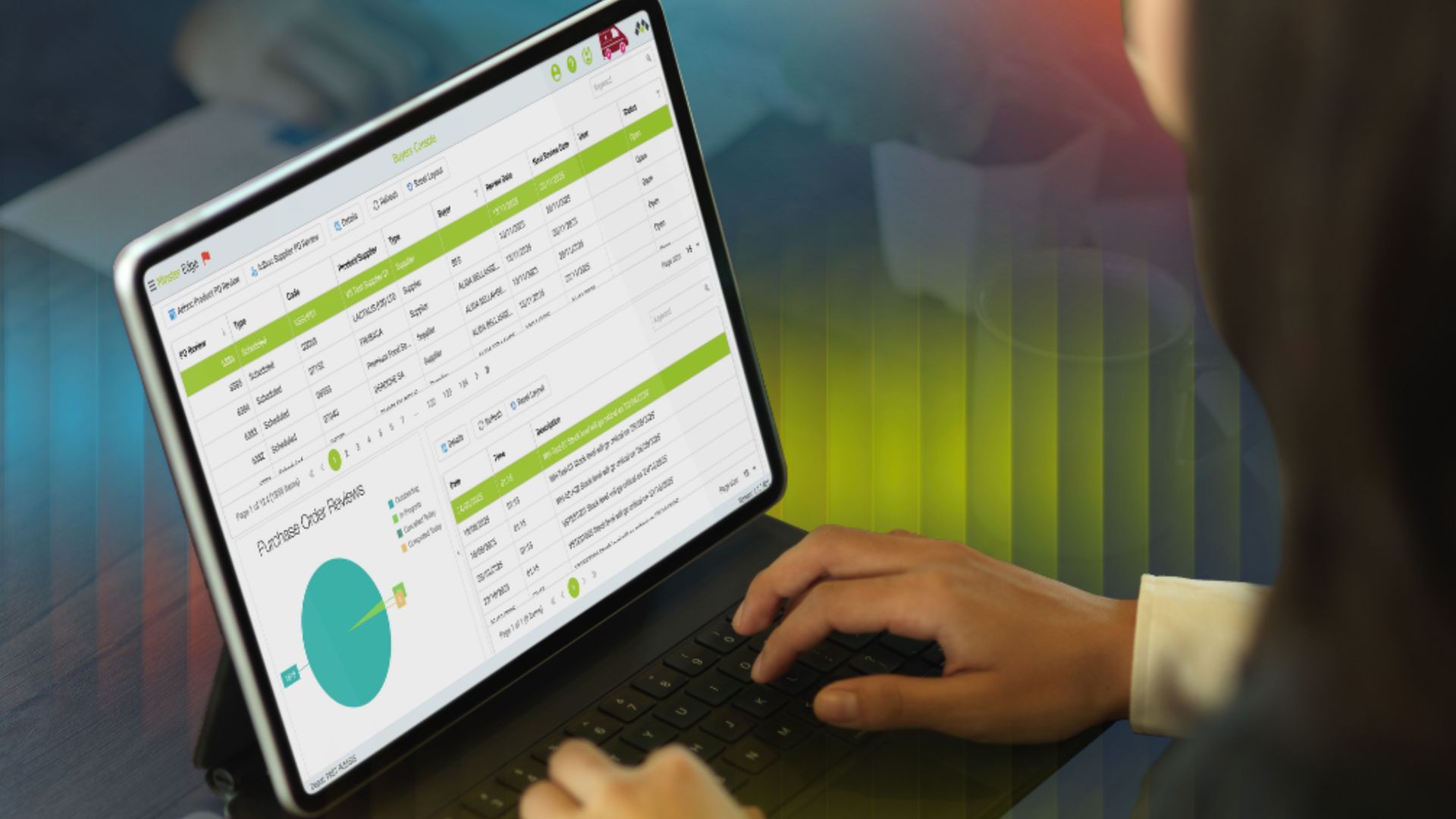
Picture of someone using Minster software in a warehouse.

Often, businesses wait until they're big to invest in company software. In our view, however, no warehousing company is too small to benefit from technological investment.

This could be a CRM system, accounting software or software that provides inventory visibility and data analytics.

Here at Minster WMS, we provide clients in a range of sectors with our CORE solution. This is a piece of cloud-based warehouse management software built for end-to-end inventory visibility.


It's our entry-level product that provides everything you need from a WMS and works straight out of the box. Unlike many of our competitors' offerings, CORE can be up and running within 24 hours.


As well as real-time inventory visibility, CORE enables you to generate highly accurate data reports with just a few clicks of the mouse. These can provide a factual basis for decision-making, whether that relates to replenishment, returns or even the layout of your warehouse.


Getting ready to grow

A small business buying or renting warehouse space is like a young couple moving into a flat. It suits their current requirements – but will they need to make room in future for the pitter-patter of tiny feet? Replace "tiny feet" with "more staff and products", and it's easy to see the similarity.


Choosing a space that can be extended vertically is a start. But you should also periodically review your layout, especially when adding new inventory. Can the space be optimised, or will you need to expand?


If your business experiences seasonal spikes and dips, it's worth considering outsourcing overflow storage or storage at peak times to a third-party logistics provider (3PL). These can help you cut costs with no cuts to your fulfilment processes.


Minster is a UK-based provider of warehouse management software. Discover CORE, our dedicated small warehouse management software – or book a demo to take it for a test drive.

Recent Posts

What is automated purchasing and how can it help your business procure more effectively? Find out
by Simon Edward 29 May 2026
What is automated purchasing and how can it help your business procure more effectively? Find out in our guide.
Different warehouses use different software solutions to manage orders and operations. Find out
by Simon Edward 25 May 2026
Different warehouses use different software solutions to manage orders and operations. Find out if an OMS or WMS is right for you.
Are you looking to level up your returns management game? Take inspiration from 6 big-name brands.
by Simon Edward 22 May 2026
Are you looking to level up your returns management game? Take inspiration from 6 big-name brands.
Are you a warehousing business looking to solve the last-mile conundrum? Here are 5 technologies
by Simon Edward 18 May 2026
Are you a warehousing business looking to solve the last-mile conundrum? Here are 5 technologies that can help.
When data is fragmented, so is business. Discover what data transformation means
by Simon Edward 15 May 2026
When data is fragmented, so is business. Discover what data transformation means for system integration and how it can help drive efficiency.
Are you getting ready to set up your first warehouse?
by Simon Edward 11 May 2026
Are you getting ready to set up your first warehouse? Get the low-down on how to proceed in our guide.
Remote and hybrid working are becoming more and more common in many sectors.
by Simon Edward 8 May 2026
Remote and hybrid working are becoming more and more common in many sectors. So, how about warehousing?
What concrete steps can you take to improve customer satisfaction –
by Simon Edward 4 May 2026
What concrete steps can you take to improve customer satisfaction – and how can a warehouse management system help? Join us for a deep dive.
What management software is right for your business? Explore the pros, cons
by Simon Edward 1 May 2026
What management software is right for your business? Explore the pros, cons and differences between a WMS and an ERP.
What are the differences between voice picking and RF picking and which is best for your warehouse?
by Simon Edward 1 May 2026
What are the differences between voice picking and RF picking and which is best for your warehouse? Find out in our warehouse guide.
Show More