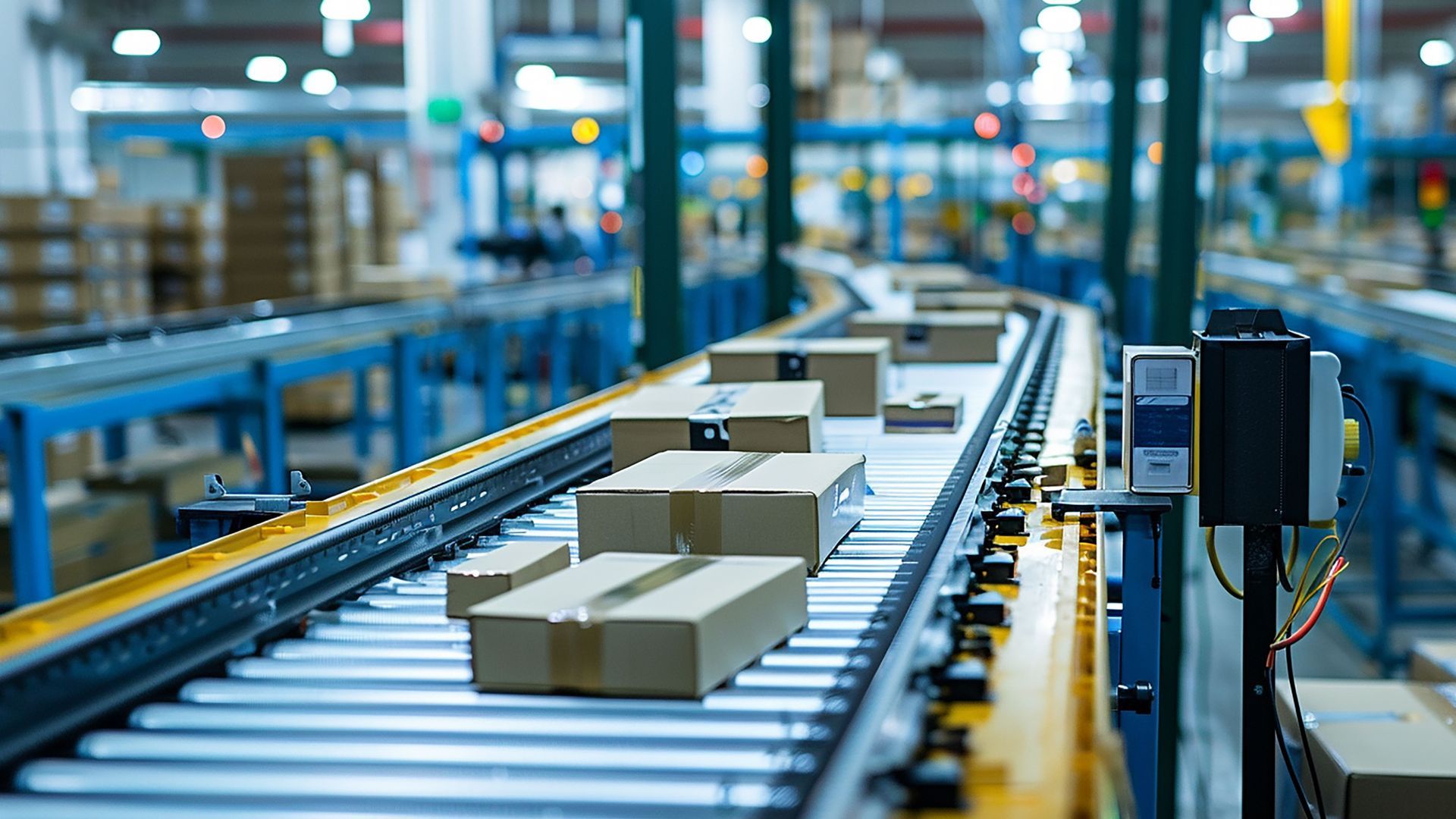

AI in warehouse management: how it's changing the industry

Simon Edward • 24 August 2026

Share this article

How is AI changing warehouse management? Explore the developments, benefits and challenges of this game-changing technology.


How is AI changing warehouse management? Explore the developments, benefits and challenges of this game-changing technology.

Sometimes, as the saying goes, life comes at you fast. Five years ago, AI was a niche concern. Today, it would be quicker to list the areas of life it hasn't affected in some shape or form.


Take the warehouse management industry. Once the domain of paper, pen and ring binders, it's rapidly shifted into cloud-based technologies – and now, increasingly, AI tools.


These tools tend to fall into two categories: tools that automate repetitive tasks and tools that analyse data in real time. (Yes, there are also large language models like ChatGPT, but that's a hot potato for another day.)


Proponents say that AI makes operations faster and more agile. It's unerring and untiring. It furnishes business leaders with the data they need to make better decisions. It is, in short, a lean, mean profit-making machine.


Critics point to the effects on the labour market as a fresh swathe of jobs becomes redundant. Others point to the uncertain ROI, the change management required and potential issues around cybersecurity, data privacy and intellectual property.


Whether you belong to either camp or are sitting on the fence, the effects are real and wide-ranging. Here are eight areas of warehouse management affected by AI.


Inventory management

Demand forecasts have long been a source of stress for businesses. Unless you sell a predictably seasonal product – sandals, say, or inflatable Santas – you're going to have to dig into the data to predict the right number of items and the right time to order them.


Data analysts and consultants are increasingly being replaced by demand forecast tools built into warehouse management systems.


These analyse historical sales, seasonal trends and even external factors, such as weather, the economy and supply chain disruptions.


This can help warehouses avoid overstocking and stock-outs, improve inventory accuracy, optimise their replenishment schedules and swiftly identify slow-moving or useless inventory.


Faster order picking


Picture of a box with a fragile sticker on it.


Order picking times directly relate to customer satisfaction. Bottlenecks at the warehouse mean bitter tears at home.


AI is increasingly used to determine the most efficient picking routes and prioritise orders according to shipping deadlines, product locations and staff availability.


This means staff spend less time wandering aimlessly around the warehouse. It means pick-per-hour rate (a common KPI) is increased. And it means the cost of fulfilment as a whole goes down.


Often, this will be combined with voice-picking headsets, barcode scanners or autonomous mobile robots (AMRs).


Warehouse robotics

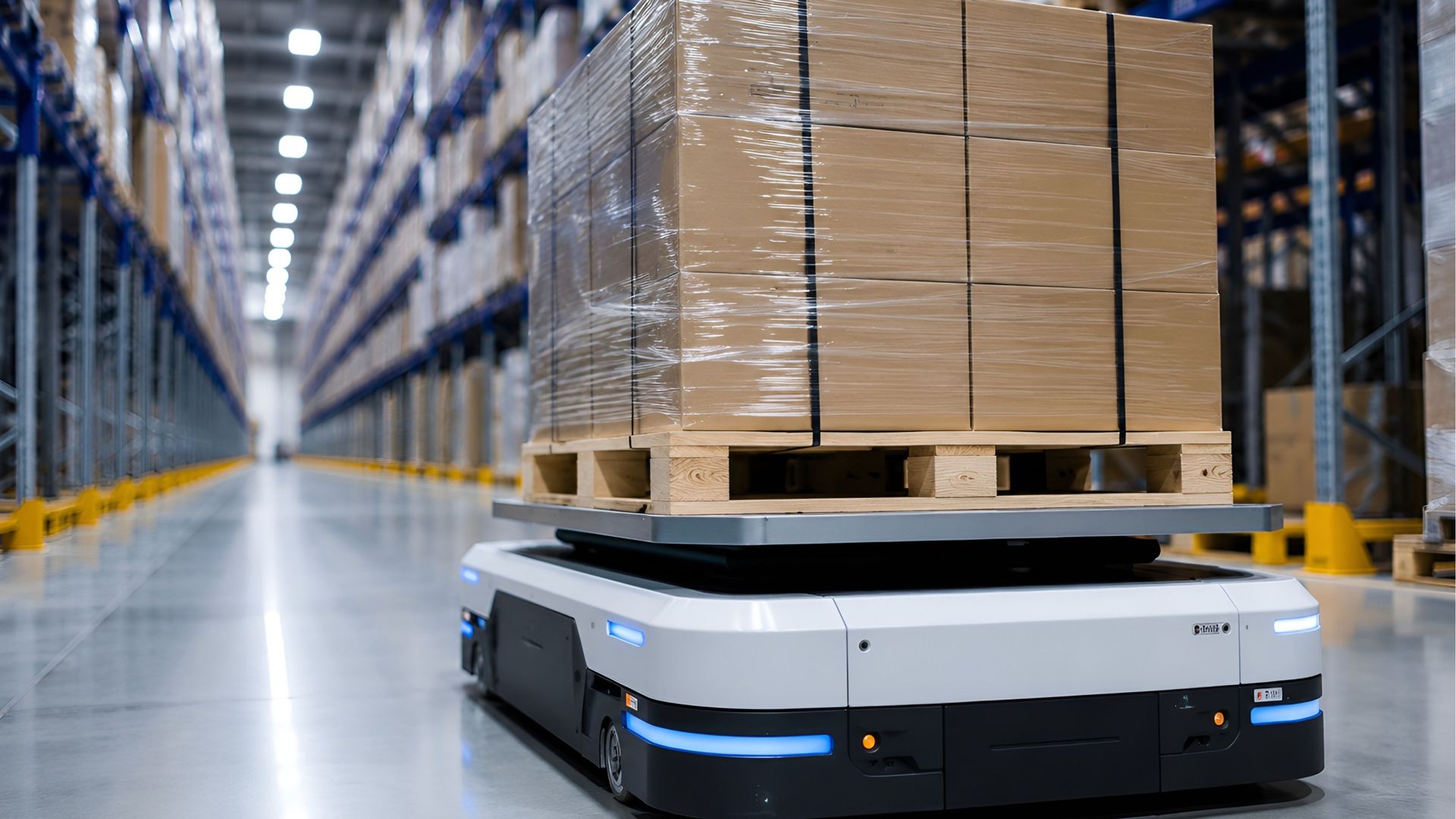
Robots have been used in warehouses since the early 1950s. The difference is that today's warehouse robots are AI-powered. That means they can adapt to changes as they occur, whether it's a new warehouse floor plan or a new workload.


AI-powered robots can transport goods between locations, sort packages, assist with picking and take care of pallets. All this is done with near-perfect accuracy, meaning fewer returns and fewer negative reviews.


AI-powered cameras

Manual inspections are time-consuming. In the world of warehouses, "time-consuming" means "money-consuming". And like so many aspects of warehouse operations, they're prone to human error.


AI-powered cameras, by contrast, can replace manual inspections with automatic inventory counting.


They can also be used to detect damaged products, verify order accuracy and even monitor the quality of pallet stacking.


Staff planning

AI tools help managers schedule staff rotas. They do this by forecasting workloads based on a whole host of factors, from expected order volumes to seasonal variations. This has the potential to improve productivity.


Predictive maintenance

It's a conundrum experienced in all sorts of industries, warehouse-based or no. How do you maintain your machines without causing disruption?


For many, it's a catch-22. Maintain your machines and they're temporarily out of use. Don't maintain your machines and they'll pack in just when you need them.


AI can help in this regard. It monitors equipment to detect signs of wear before it fails. This reduces downtime, lowers maintenance costs and lengthens the lifespan of essential equipment.


Supply chain optimisation


Picture of a Cargo ship.


In a sense, the phrase "supply chain" is self-explanatory. But it sometimes feels less like a continuous chain and more like a wobbly conga line.

AI can help. It coordinates delivery schedules, vehicle arrivals, shipments and communications with suppliers. It can also immediately offer alternatives when something goes awry.


The result? Fewer bottlenecks and fast turnarounds.

Data-driven decision-making

Warehouse managers want to make decisions based on fact, not fancy. Until recently, this often meant employing in-house analysts or calling on external consultants.


More and more, however, warehouse managers use AI to give them the information they need to make decisions. That could be anything from inventory shortages to picking delays, and from equipment issues to unexpected demand patterns.


This enables a leadership style that's proactive, not reactive, and in which decisions can be justified as rooted firmly in the facts.


What are the benefits and challenges of AI in warehouse management?

Despite its astonishingly rapid ascent, we're still in the early days of AI in warehouse management. Nevertheless, signs point to a range of benefits. These include:


  • Improved inventory accuracy
  • Faster order fulfilment
  • Lower operating costs
  • Space optimisation
  • Customer satisfaction

Alongside these opportunities for improvement, however, come a set of novel challenges. These tend to centre on deployment and integration.


AI tools cost money – both in terms of software and hardware and in terms of downtime as they're integrated with existing systems.


There may be resistance from within the company to the use of AI tools. This can necessitate employee training and thoughtful change management.


Finally, there are concerns about cybersecurity, data privacy and IP.

These are all unfolding issues, and it's too soon to say how they'll affect warehouse management. As soon as the picture is clearer, we'll be sure to keep you in it.


Founded in 1978, Minster WMS is a UK-based provider of warehouse management software solutions. For more up-to-the-minute industry analysis, follow our blog.


Recent Posts

Warehouse mistakes cost money. But how much – and how can a warehouse management system help you
by Simon Edward 21 August 2026
Warehouse mistakes cost money. But how much – and how can a warehouse management system help you save?
Would your business benefit from customising WMS integrations? Explore your options and common use
by Simon Edward 17 August 2026
Would your business benefit from customising WMS integrations? Explore your options and common use cases in our industry guide.
There are different approaches to system integration – and each comes with pros and cons. Explore 4
by Simon Edward 14 August 2026
There are different approaches to system integration – and each comes with pros and cons. Explore 4 common system integration methods.
Are you looking for ways to optimise your FMCG warehousing operations? Explore 9 strategies
by Simon Edward 10 August 2026
Are you looking for ways to optimise your FMCG warehousing operations? Explore 9 strategies in our industry guide.
Are you shopping around for warehouse storage? Discover the benefits and considerations
by Simon Edward 7 August 2026
Are you shopping around for warehouse storage? Discover the benefits and considerations that come with 8 common warehouse racking systems.
Are you an SME looking for a WMS? Explore 6 reasons why deployment time matters
by Simon Edward 31 July 2026
Are you an SME looking for a WMS? Explore 6 reasons why deployment time matters when weighing up your options.
Explore 5 evergreen problems and state-of-the-art solutions in our inventory management
by Simon Edward 24 July 2026
Explore 5 evergreen problems and state-of-the-art solutions in our inventory management industry guide.
Do you run a subscription box warehouse? Explore 5 ways to optimise your operations in our industry
by Simon Edward 20 July 2026
Do you run a subscription box warehouse? Explore 5 ways to optimise your operations in our industry guide.
Are you looking to rapidly grow your eCommerce operation? Explore 6 ways to accelerate your brand.
by Simon Edward 17 July 2026
Are you looking to rapidly grow your eCommerce operation? Explore 6 ways to accelerate your brand.
Is your business making fulfilment errors? It might be time to upgrade to pick, pack and ship
by Simon Edward 13 July 2026
Is your business making fulfilment errors? It might be time to upgrade to pick, pack and ship software.
Show More