







Voice picking vs RF scanning: 2 picking technologies explored

Simon Edward • 1 May 2026

Share this article

What are the differences between voice picking and RF picking and which is best for your warehouse? Find out in our warehouse guide.


What are the differences between voice picking and RF picking and which is best for your warehouse? Find out in our warehouse guide.

What is the most important aspect of warehouse management? Anybody familiar with the sector will tell you there's no single answer. A successful warehouse is the product of multiple overlapping processes.

One thing, however, is for sure. No warehouse can run efficiently without a decent picking system in place.

After all, a warehouse isn't just a storeroom. It's also the intermediary between your company and the customer. If procedures aren't in place to ensure that the right product is picked, you're staring down the barrel of costly returns and online scorn.

These days, most warehouses use some form of technology for picking. Two of the most commonly deployed solutions are voice picking and RF scanning.

So, how do these systems work – and which is best for you? Let's find out.

What is voice picking?

Voice picking is the answer to a problem faced by many warehouse managers who rely on purely manual picking processes. How do you make sure your picking staff move quickly, pick accurately and stay safe?

It works by equipping workers with headsets. They receive audio instructions for picking and use the built-in microphone to verbally confirm that the right steps have been taken.

All the while, staff have their hands free (not a clipboard or handheld scanner in sight) and their eyes on the task.

The instructions come from a warehouse management system – and indeed, the benefits of voice picking are one of the most compelling reasons to implement a state-of-the-art WMS.

The WMS directs the member of staff to the item that needs picking. They pick the product and confirm it verbally. The exact verbal confirmations differ between systems, but most are easy to pick up and easy to use.

As well as ensuring picking accuracy, voice picking contributes to real-time inventory accuracy. This is because the verbal confirmation instantly records the action. The inventory is automatically updated before the staff member moves on to the next pick.

What are the benefits of voice picking?


Picture of a person using a voice picking headset.

The main benefits of voice picking all give it an edge over manual equivalents. Workers are freed from cumbersome clipboards and scanners and can use both hands for picking. This ensures safety in the warehouse as well as increasing productivity.


A voice-picking system also removes some of the errors that come from staff reading from paper or misreading scanner screens. And because the system is automatically updated, inventory errors are also kept to a minimum or even zero.


Finally, the learning curve for a voice-picking system is far from steep. Newly onboarded staff can be brought up to speed quickly, simply having to adopt a few easy-to-grasp verbal commands.


What is RF picking?

Radio frequency (RF) picking offers a different kind of order fulfilment. With this solution, pickers use handheld or wearable scanners. These receive instructions in real time from the WMS.


The RF device directs them to the item they need to pick. There, they scan the item's location and SKU with the device. The inventory is then automatically updated.


The device itself can be a handheld scanner, sometimes known as an "RF gun". It can also be a wearable, such as a ring scanner on the finger or a wrist-mounted computer. The latter, like voice picking, allows for hands-free picking.


What are the differences between voice picking and RF picking?

Both voice picking and RF picking are technological solutions for picking processes. Voice picking uses headset-guided audio instructions while RF picking uses handheld scanner guns or wearable barcode scanners.

There are five main differences between these two methods.

1. Hands-free capability

Voice picking lets workers keep their hands free for picking. This can help keep them safe, especially in high-volume, high-velocity environments.

By contrast, RF scanners are often handheld. This can slow down movement. Some wearable scanners, however, allow for hands-free use.

2. Accuracy

Voice-picking systems are very accurate. At Minster WMS, we've developed voice picking software that delivers up to 99.98% picking accuracy.

Picture of someone using Minster software in an office.

There are several reasons for this. With no screens or written notes, there's less chance of misreading instructions. That also means increased situational awareness – the worker can focus on what they're doing, rather than splitting their attention between the product and a screen.

RF scanners are accurate but lack the near-perfect accuracy of voice picking. This is because label scanning and screen reading are still vulnerable to human error.

3. Speed

Both voice picking and RF picking can be taught to workers quickly. However, the process of voice picking is typically faster than RF picking. This is because scanning and keying in quantities takes more time than simple verbal commands.

4. Gear

Voice picking involves wearing a headset with a microphone. RF picking, by contrast, involves handheld or body-mounted scanners.

5. Environmental applications

Voice picking and RF picking have different benefits for different environments. In cold storage or high-velocity warehouses, voice picking is often best, while RF is useful in environments with low visibility.

Voice picking vs RF picking: which is best for your warehouse?

The choice between voice picking and RF picking depends on several factors – factors that will be unique to your own warehouse operations.

RF picking can be a good choice for smaller companies looking to save money upfront. In some cases, it's necessitated by the use of barcodes without consistent labelling. What's more, it can be a natural progression from other kinds of visual, screen-based commands.

Voice picking, by contrast, is best for warehouses looking to boost productivity in high-volume, SKU-heavy warehouses.

A voice-picking system such as ours can increase accuracy up to 99.98%. If you're dealing with complex orders, this can be a huge contributor to customer satisfaction.

Last but not least, the hands-free nature of voice picking makes it beneficial in warehouses where workers have to handle large or awkward items.

Are you looking to improve picking accuracy in your warehouse? Minster's WMS solutions include a comprehensive pick-by-voice system that also covers operations like goods in, putaway, replenishment and vehicle loading. Fully implemented, it can boost picking accuracy to 99.98% and accelerate dispatch times by up to 80%. Book a demo today to learn more.


Recent Posts

Seasonal demand can make inventory planning a headache. Learn how to keep enough stock
by Simon Edward • 30 October 2026
Seasonal demand can make inventory planning a headache. Learn how to keep enough stock without wasting money on overstocking.
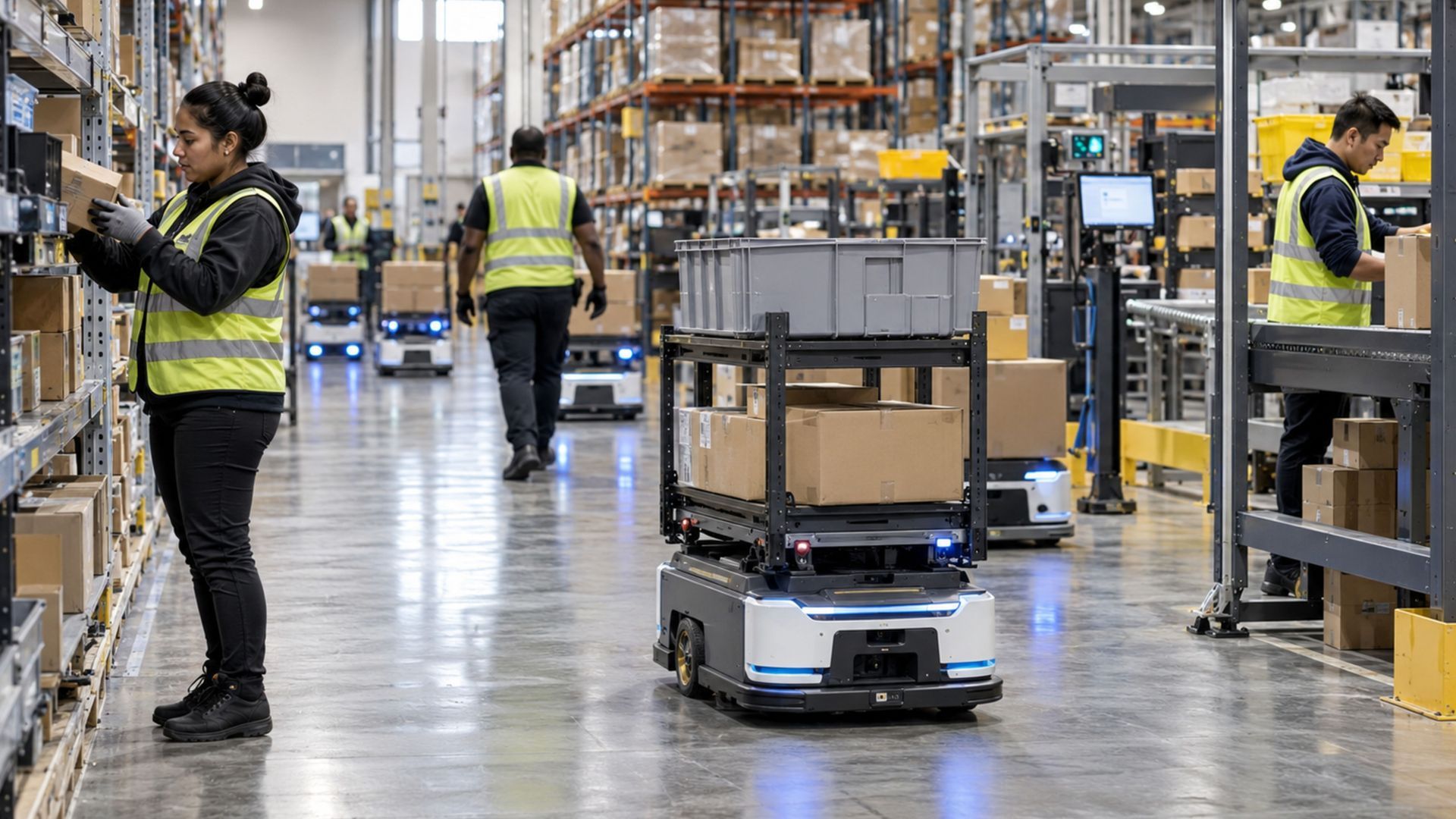
Today, goods are often brought to warehouse workers by robots and automated retrieval systems.
by Simon Edward • 23 October 2026
Today, goods are often brought to warehouse workers by robots and automated retrieval systems. Could a system like this work for you?

Is it time to upgrade your warehouse management system? Explore 10 telltale signs in our guide.

by Simon Edward • 21 October 2026
Is it time to upgrade your warehouse management system? Explore 10 telltale signs in our guide.
One of the under-sung benefits of a WMS is its capacity to reduce waste. Learn more
by Simon Edward • 21 October 2026
One of the under-sung benefits of a WMS is its capacity to reduce waste. Learn more in our industry guide.

Middleware enables different pieces of software to communicate and share data.
by Simon Edward • 12 October 2026
Middleware enables different pieces of software to communicate and share data. Find out what that means in practice.
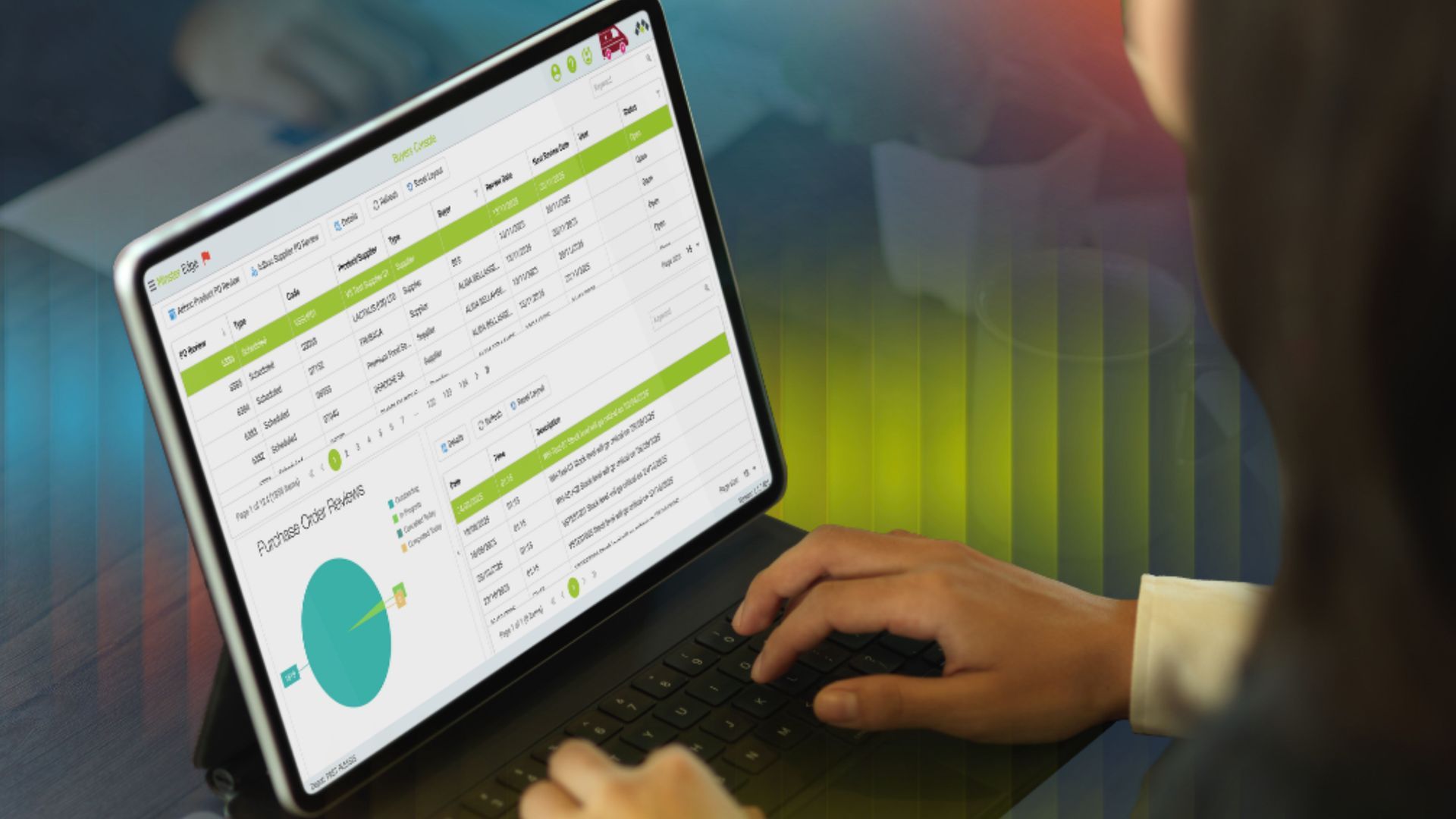
Integrating different platforms can unlock new efficiencies.
by Simon Edward • 9 October 2026
Integrating different platforms can unlock new efficiencies. In this article, we explore how you can link your ERP, WMS and eCommerce platforms.

Every business needs inventory visibility. Find out why – and how
by Simon Edward • 5 October 2026
Every business needs inventory visibility. Find out why – and how a warehouse management system can help.
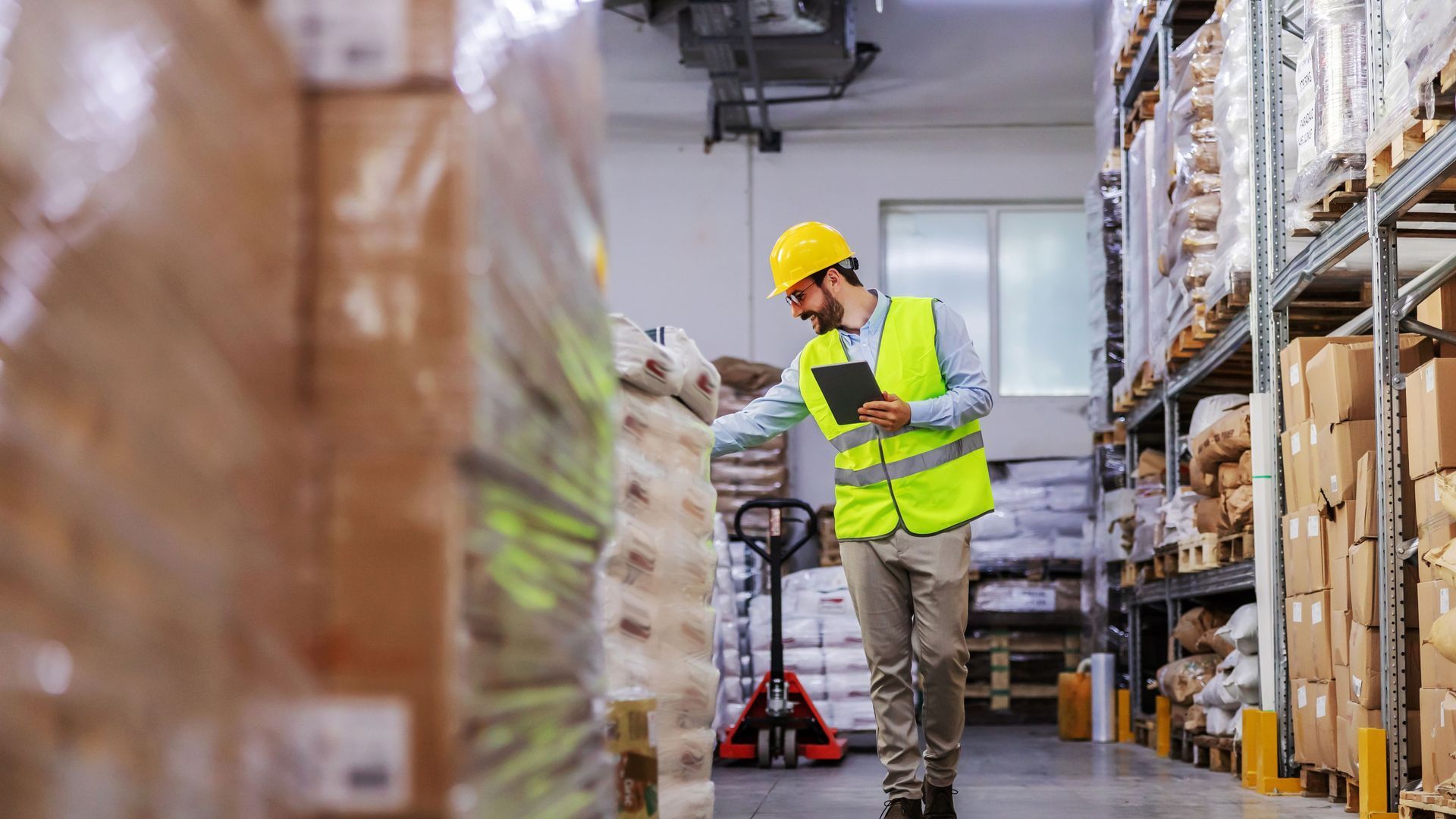
Wholesale warehouse fulfilment presents unique challenges and requires unique solutions.
by Simon Edward • 28 September 2026
Wholesale warehouse fulfilment presents unique challenges and requires unique solutions. Explore them in our industry guide.

When managing inventory, it's important to calculate safety stock levels. Find out how to do it
by Simon Edward • 25 September 2026
When managing inventory, it's important to calculate safety stock levels. Find out how to do it – and how a WMS can help.

Spreadsheets can do many jobs – but much better options exist for warehouse management.
by Simon Edward • 21 September 2026
Spreadsheets can do many jobs – but much better options exist for warehouse management. Learn how to upgrade to a proper WMS.
Show More