



9 key inventory reporting metrics to track warehouse efficiency

Simon Edward • 15 June 2026

Share this article

KPIs are an essential tool for measuring success – and inventory control is no exception. Find out which metrics are worth tracking.


KPIs are an essential tool for measuring success – and inventory control is no exception. Find out which metrics are worth tracking.

How do you measure success? In the business world, there are several answers to this question – answers that fall into two main categories.


The first category could be called "vibes". Does it feel as though your company is aligned with its goals? Is it doing what it set out to do? Does it work as a team? And so on.


The second category, however, is based on hard data. It's a category full of key performance indicators (KPIs) – metrics used to track profits, efficiencies and other key aspects of business with precision.


Some of these are general. Many companies track net profit margin, revenue growth rate, customer lifetime value and employee retention rates.


But some KPIs are specific – for instance, the metrics used for inventory reporting. These help warehouses optimise their efficiency by keeping a close, objective eye on inventory.


They cover everything from accuracy to cost and speed. Done well, they can improve the overall order fulfilment process, lower expenses and increase customer satisfaction.


Sounds good, doesn't it? But before we explore nine of these key inventory reporting metrics in detail, let's answer the important question: why are KPIs important, anyway? 


Why are KPIs important?

KPIs provide businesses with data that's both quantifiable and actionable. Above all, quantifiable and actionable data needs to be accurate. Without this baseline accuracy, no business can be sure that its decisions are based on reality rather than an educated hunch.


By showing businesses how well they're achieving their objectives, KPIs encourage informed decision-making – not to mention accountability.


At the end of the day, KPIs turn abstract goals into measurable targets. They let you know what needs improving and give you the data you need to make the necessary changes.


Nine key inventory reporting metrics

There are many valuable KPIs in the world of warehousing. Here are nine that can help you identify problems and make positive changes to your operations.


1. Inventory accuracy


Picture of someone scanning stock.

This KPI measures the alignment of physical inventory to digital records. It's calculated as a percentage – and the higher the percentage, the better.

A high inventory accuracy translates into real-world results. It means smoother operations, fewer stockouts and an increase in customer satisfaction.


2. Inventory turnover

Whereas inventory accuracy compares physical inventories and digital records, inventory turnover identifies how quickly inventory is sold and replaced within a set period (typically a year). It's calculated by dividing the cost of goods sold (COGS) by the average inventory.


3. Order accuracy rate

The order accuracy rate measures the percentage of orders picked, packed and shipped without errors. It demonstrates how reliably a company fulfils orders. This can have a direct impact on minimising returns and improving operational efficiency.


4. Warehouse capacity utilisation

This KPI measures the percentage of a warehouse's total available storage space currently being used for inventory. This can help warehouse leaders avoid overstocking. It's measured by dividing the used space by the total available space and multiplying the result by 100.


5. Order cycle time

Order cycle time is a KPI that measures the average time from when a customer places an order to when it's shipped, excluding the delivery time after the order has left the warehouse. It's calculated by dividing the total time to ship all orders by the total number of orders shipped.

6. Inventory shrinkage

This measures the gap between book inventory (what you think you have) and physical inventory (what you actually have). It's calculated based on the amount of goods missing because of theft, damage or administrative error, and is typically presented as a percentage of the overall inventory.

7. Dead stock

In the world of retail, dead stock is unsold inventory that's taking up warehouse space (it has a different meaning in the world of fashion).

This KPI measures the amount of dead stock as a percentage of inventory that hasn't sold or been moved within a specific period, and is unlikely to sell in the future. It helps identify wasted space and tied-up capital.

8. Backorder rate


Picture of a empty place on a shelf.

The backorder KPI tracks the percentage of customer orders that can't be fulfilled due to insufficient stock but have been accepted for delivery when the item is available.


A high backorder rate tells warehouse leaders that steps must be taken to improve inventory management and forecasting.


9. Receiving efficiency

Receiving efficiency is a KPI that measures the productivity of a warehouse's inbound goods process. It's calculated by dividing the volume of inventory received by the number of hours worked.


This KPI helps businesses track how effectively they process, inspect and store new stock. The higher the figure, the better, faster and more efficient their receiving processes.


What do you need to effectively monitor inventory reporting metrics?

Perhaps the most useful tool for effectively monitoring inventory reporting metrics is a warehouse management system (WMS). A good WMS will provide end-to-end visibility into all your inventory data and can track order accuracy, cycle times and other KPIs in real time.


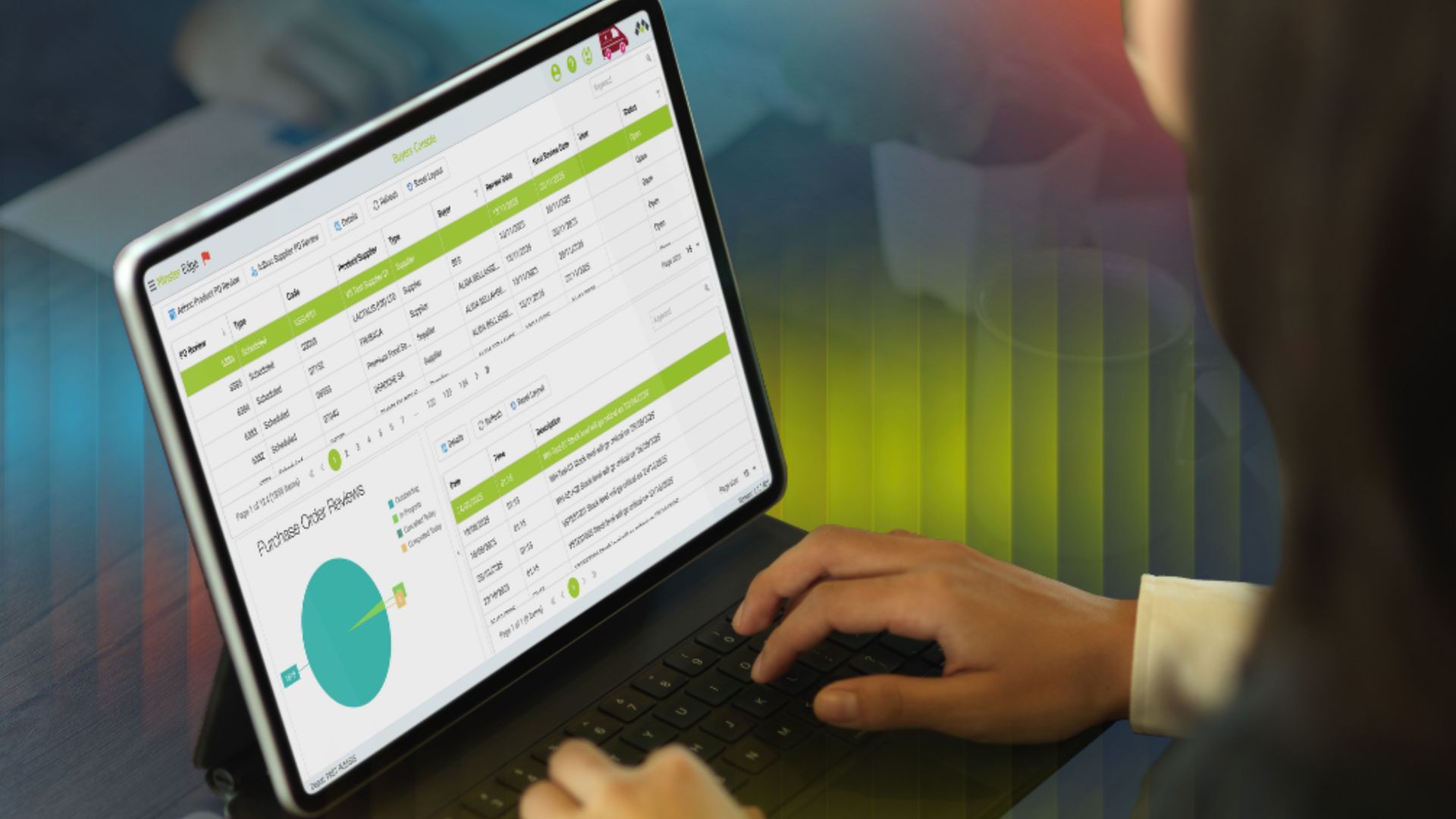
Most modern warehouse management systems have built-in KPI dashboards. These allow warehouse leaders to track multiple metrics. Moreover, the WMS enables them to generate highly accurate and highly detailed reports based on this data.


All this brings businesses closer to the dream of data-backed decision-making. It's a great example of how technology can help make a warehouse more efficient.


Technology alone, however, can't make all the difference. You also need to proactively set baselines and targets to ensure operational progress. A best practice in this regard is to build KPI management into your regular meetings and agendas.


Are you looking for SaaS inventory management software that can help you get a handle on your stock? At Minster WMS, we develop warehouse management systems that provide detailed insights into stock levels and customer demand. Book a demo today to see our solutions in action.

Recent Posts

What are the benefits of a transportation management system for warehouses?
by Simon Edward 12 June 2026
What are the benefits of a transportation management system for warehouses? Explore 11 key advantages in our guide.
Are you new to warehouse management? Join us for essential advice to help you and your team thrive.
by Simon Edward 8 June 2026
Are you new to warehouse management? Join us for essential advice to help you and your team thrive.
Are you struggling to optimise a small warehouse? Explore 5 key strategies and technologies
by Simon Edward 5 June 2026
Are you struggling to optimise a small warehouse? Explore 5 key strategies and technologies that can help.
What is automated purchasing and how can it help your business procure more effectively? Find out
by Simon Edward 29 May 2026
What is automated purchasing and how can it help your business procure more effectively? Find out in our guide.
Different warehouses use different software solutions to manage orders and operations. Find out
by Simon Edward 25 May 2026
Different warehouses use different software solutions to manage orders and operations. Find out if an OMS or WMS is right for you.
Are you looking to level up your returns management game? Take inspiration from 6 big-name brands.
by Simon Edward 22 May 2026
Are you looking to level up your returns management game? Take inspiration from 6 big-name brands.
Are you a warehousing business looking to solve the last-mile conundrum? Here are 5 technologies
by Simon Edward 18 May 2026
Are you a warehousing business looking to solve the last-mile conundrum? Here are 5 technologies that can help.
When data is fragmented, so is business. Discover what data transformation means
by Simon Edward 15 May 2026
When data is fragmented, so is business. Discover what data transformation means for system integration and how it can help drive efficiency.
Are you getting ready to set up your first warehouse?
by Simon Edward 11 May 2026
Are you getting ready to set up your first warehouse? Get the low-down on how to proceed in our guide.
Remote and hybrid working are becoming more and more common in many sectors.
by Simon Edward 8 May 2026
Remote and hybrid working are becoming more and more common in many sectors. So, how about warehousing?
Show More