

Demand forecasting: meaning, methods and techniques explored
To stock a warehouse effectively, you need a sense of future demand. Find out how expert opinion and warehouse management systems can help.
Humans have never been great at predicting the future – and yet without a sense of what the future holds, it's virtually impossible to make decisions.
The weight of the future on the present is something felt in many aspects of business life. But it's especially important when it comes to managing your warehouse inventory, no matter what sector you work in.
How much to stock? It's such a simple question and yet such a hard one to answer. Stock too much and you're wasting time, money and shelf space. In the case of perishables, excess stock is an environmentally unfriendly waste. In the case of non-perishables, it clutters up the place.
Yet under-stocking is just as pernicious. Above all, you need your customers to be satisfied – and that certainly won't happen if you're constantly fobbing them off with preorders and not-quite-like-for-like items.
Finding the balance is tricky but not impossible. To succeed, your priority should be to forecast demand.
Sometimes, demand forecasting is easy. You're going to sell more pumpkins at Hallowe'en and more chocolate bunnies at Easter.
In other cases, it's more complicated but still relatively predictable. At other times, it's all but impossible, especially if you're dealing with lots of fast-moving SKUs.
That's why you need to draw on both data-driven and judgment-based forms of demand forecasting. In other words, you need a powerful warehouse management system (WMS) and expert opinion at your fingertips.
Demand forecasting isn't perfect. Items drop out of fashion or suddenly find favour. Environmental and political crises hurl a box of spanners into the works.
Nevertheless, demand forecasting is an essential tool in your toolbox. Without it, you might as well ask the fortune-teller for business advice.
But before we look at the different methods and techniques used by businesses to forecast demand, what exactly do we mean by it?
What is demand forecasting?
In principle, demand forecasting is simple. It involves estimating future demand for products and services.
Like most things in life, however, things quickly get complicated. The methods and techniques used to forecast demand involve historical data, market trends and a smorgasbord of variables.
At its most basic, however, demand forecasting answers the question "What, when and how much do customers want?"
It's easy to see why this is so important for warehouse-based businesses. It influences inventory management as well as resource allocation. It affects everyone from the finance department to warehouse managers.
This might sound like a whole load of stress. But done well, demand forecasting can lead to better decision-making, happier customers and bigger profits.
How does demand forecasting work?
Regardless of the precise methods or techniques used, demand forecasting usually goes something like this.
First, different types of demand are identified. Some products are stable, some seasonal and some "lumpy" or intermittent. These different types of demand need to be factored in when making predictions.
Secondly, outliers need to be removed. What are outliers? These are freak events that are unlikely to repeat. Sales data from the COVID-19 pandemic, for instance, has limited relevance in 2026.
And finally, forecasting horizons have to be taken into account. The method or technique used to forecast demand partly depends on whether you're making short-term, medium-term or long-term predictions.
Those are the broad strokes. Now it's time to look at the methods and techniques applied in more detail.
What methods and techniques are used to forecast demand?
There are two big categories of methods and techniques used to forecast demand. The first is data-driven and the second is judgment-based – often referred to as "quantitative" and "qualitative" research, respectively.
To illustrate the difference, consider the ways you could ascertain staff satisfaction with a new IT system.
You could ask them to rate their satisfaction on a scale of one to five and calculate an overall percentage. This is a data-driven or quantitative method.
Alternatively, you could ask them open-ended questions and record their answers. This is a judgment-based or qualitative method.

The truth is that most effective demand forecasting requires a mixed methodology – in other words, a bit of both. A WMS can help with the numbers and expert opinion can provide the human touch.
Data-driven demand forecasting
Data-driven demand forecasting involves looking at past data to identify trends and patterns. Data points are averaged and recent data is given more weight. Influencing factors such as economic variables are taken into account and a big, yet detailed, picture is presented.
This can be carried out by internal staff, a third-party consultant or cloud-based warehouse management software that leverages predictive analytics.
Judgment-based demand forecasting
Judgment-based demand forecasting is typically done by third parties. If you're managing a warehouse, you'll likely only engage with the results of these kinds of demand forecasts – not carry them out yourself.
Qualitative methods of this kind include:
- Market research (surveys, focus groups, social media analysis)
- Expert opinion from CRMs or third-party specialists
- The Delphi method (a group consensus among experts arrived at via a series of questionnaires)
- Comparisons with past product performance and economic landscapes
How can a cloud-based WMS help?
A WMS is an essential tool in levelling up your demand forecasting.
This is primarily because of its function as a "single source of truth" – a centralised record of real-time data relating to inventory levels, sales and trends.
Not any WMS will do, however. You need one that's used by successful businesses – and one that's remotely accessible for round-the-clock, hybrid-working-friendly updates.
A good WMS will use predictive analytics to provide sales reports. These can be invaluable when choosing what to reorder and when.
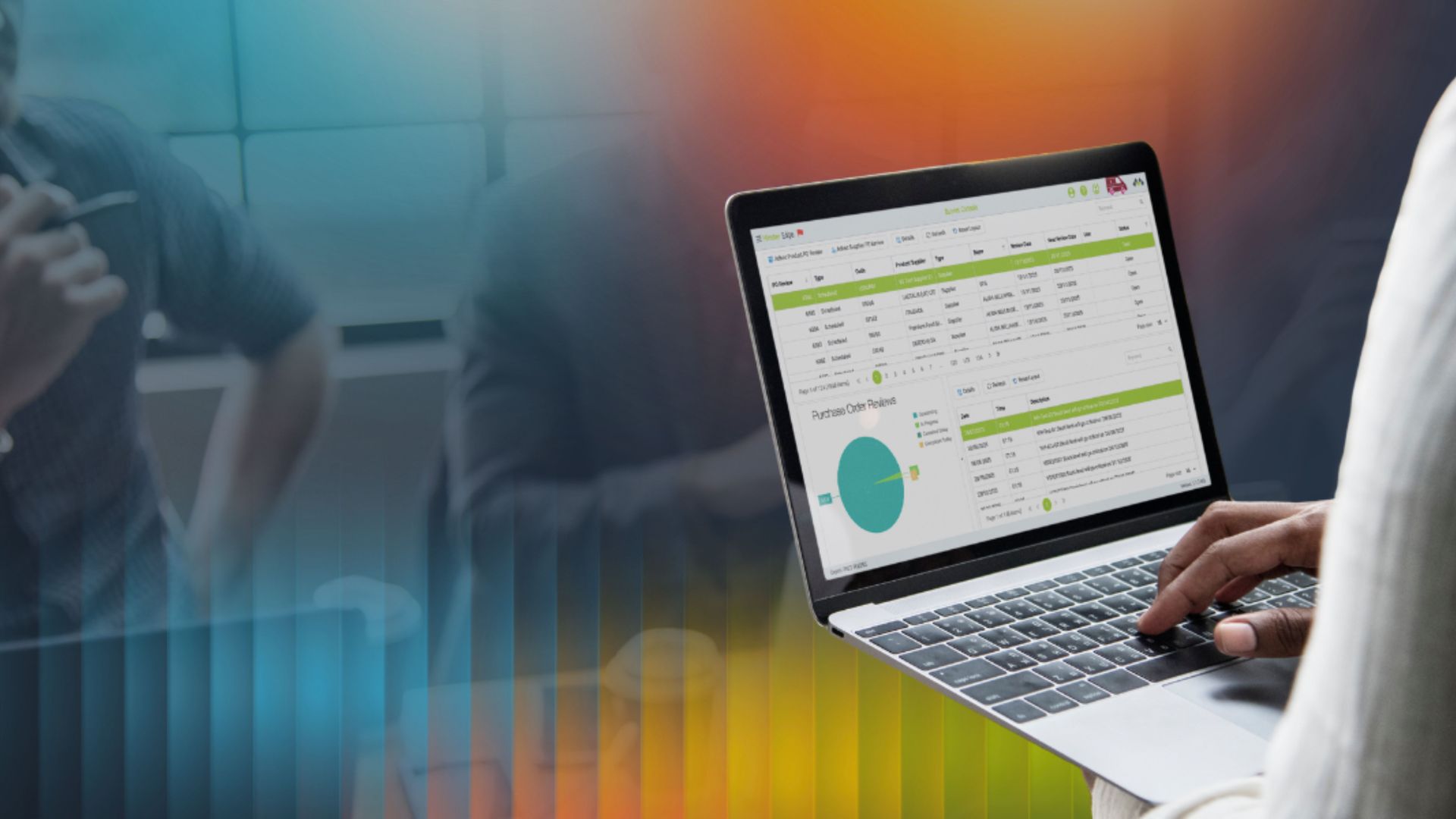
Are you looking for highly capable cloud-based WMS software to improve your demand forecasting? Minster's EDGE and CORE systems give you end-to-end visibility of all your inventory and all warehouse operations. Book a demo with our UK experts to see our solutions in action.