


Optimising your warehouse pick and pack system
Are you a warehouse-based business looking to take your picking and packing to the next level? Explore 5 strategies in our guide.

A warehouse isn't just a room. It's a place where stuff happens. Lots of stuff. Stock arrives, gets organised, gets picked, gets packed, gets dispatched.
What's more, it's a place where people work. And for people to work efficiently, processes need to be in place to optimise your systems.
The reason why is obvious. Picking and packing isn't done for its own sake. It's there to make sure your goods reach their destination on time and in good nick – whether that's to a customer or another business.
In fact, it's no exaggeration to say that you can't build a successful warehouse-based business without optimising your picking and packing.
So, how do you do it? As so often in the business world, there's no magic wand, magic meeting or magic mandate. These things take time.
To make the most of your systems, you need to find ways to reduce travel time in the warehouse. This requires logical and logistical thinking, optimising picking paths in a complex space. You'll need to figure out where to place items and how to handle multiple orders simultaneously.
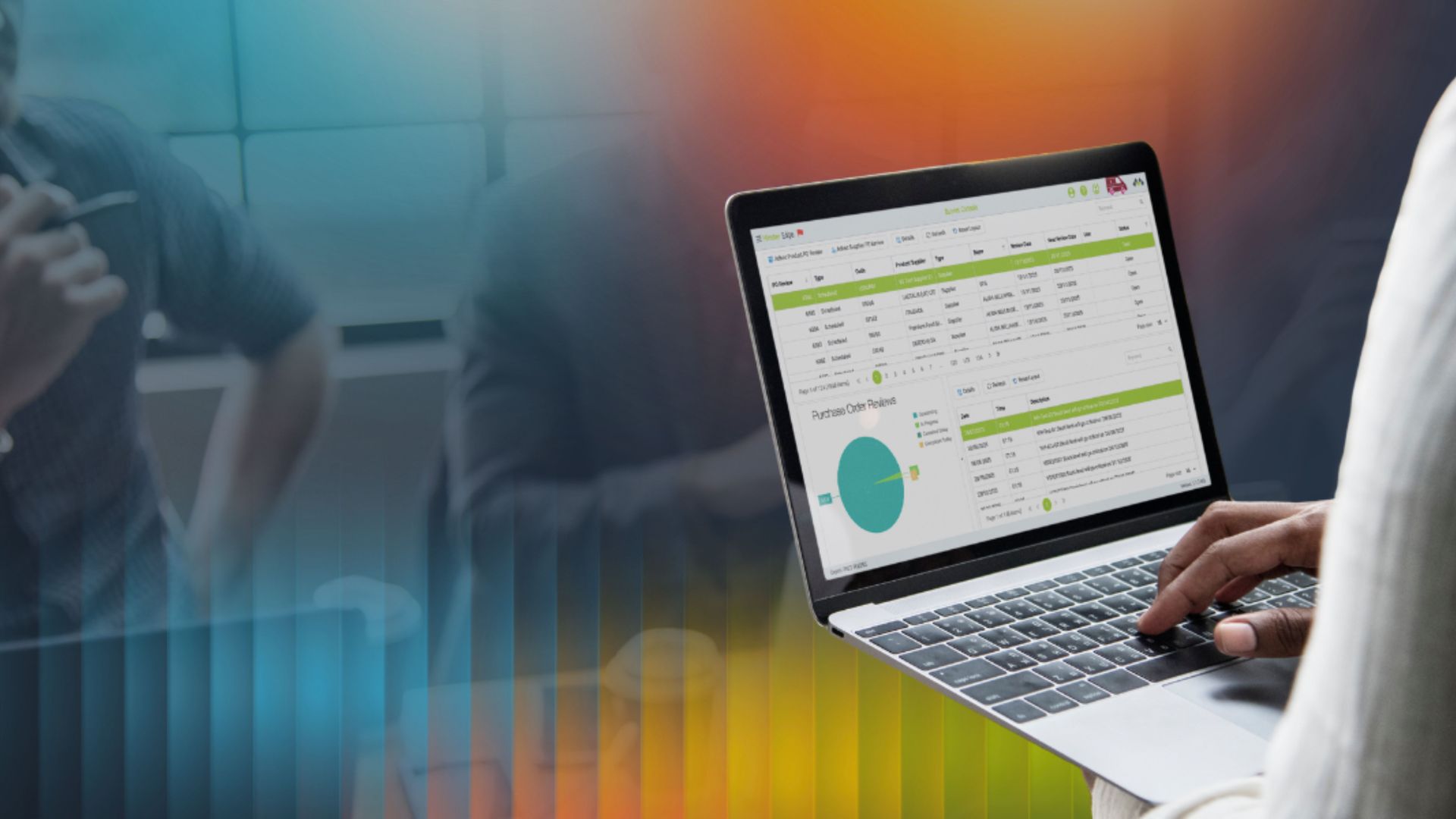
But perhaps most importantly, you need technology on your side. This is why no warehouse-based business can afford to work without a cloud-based warehouse management system (WMS).
Here, then, are five ways you can optimise your warehouse's pick and pack system. We hope it helps.
Five ways to optimise picking and packing
1. Optimise your warehouse layout
A warehouse is a space where people and objects move about a lot. So, you need to give some careful thought to how it's laid out.
Inventory can be organised in assorted ways at once. For instance, you can arrange your items by how close they should be to the packing area, with fast-moving items placed the nearest. At the same time, items often purchased together can be placed together.
Cloud-based warehouse management software can help you make these decisions by providing you with easily accessible data about your stock.

Labels are your friend – both on the products themselves and on bins and aisles.
Finally, it can help to think vertically, ensuring your most frequently picked items are at a height that won't require much bending or reaching.
2. Upgrade your
WMS
It's not for nothing that advocates for warehouse management systems speak in semi-mystical terms about a "single source of truth". A state-of-the-art WMS gives you real-time access to all your data at all times.
A WMS enables you to digitise stock management, track your inventory minute by minute and automate stock replenishment. Each of these functionalities unlocks efficiencies that mean you're in a better position to optimise your pick and pack system.
What's more, a good WMS can be integrated with pick-and-pack technologies. It can be hooked up to barcode scanning or pick-by-voice systems. Both of these methods increase accuracy and reduce human error – two changes that will be welcomed most by your customers.
3. Think about picking strategies
They say there's more than one way to bake a cake – and there's certainly more than one way to pick and pack. The strategy you use will depend on the nature of your business and can help you optimise your operations.
The three main strategies are batch picking, zone picking and wave picking.
Batch picking
Batch picking groups multiple orders together to be picked at once, thereby reducing travel time (a key contributor to inefficiencies in the warehouse).
Zone picking
Zone picking, by contrast, involves assigning staff to distinct designated zones for picking and packing. Often called "pick and pass", it perhaps most closely resembles an assembly line, with an order being passed from one zone to the next until the order is complete.
Wave picking
Finally, there's wave picking, sometimes known as "cluster picking". This involves grouping orders by common criteria – the courier used, say, or the item type. These orders are released in scheduled waves rather than continuously.

The strategy you use will depend on the nature of your business – and it's a choice that can have a significant important on the efficiency of your picking and packing.
4. Think about the process
So, you've optimised your warehouse layout, invested in a spanking new WMS and rehauled your picking strategies. Time for tea and biscuits? Not so fast.
Picking and packing is one big process – so it's important to optimise every step. This includes links in the chain that might at first seem trivial.
Take boxes. Are your products grouped by box size? Is the box required for each SKU clear to staff? Addressing this six-sided issue can help reduce the amount of time staff spent making decisions, and increase the time they spend picking and packing.
The same goes for packing materials. Are they laid out clearly on an ergonomic workstation? Think of it like a kitchen. If you're cooking a chilli con carne, you want all your ingredients and tools out in front of you – but also organised for easy use.
5. Sort out staff training
At the end of the day, warehouse operations are only as good as your staff. And most of the time, your staff are only as good as their training.
When you onboard staff, are you making sure they know the warehouse layout in detail? Do they feel able to ask questions and provide feedback? Are they safe?
If the answer to any of these questions is "no" or "maybe", there's probably something wrong with your training.
Without adequate training, mistakes get made in the pick and pack process. And as with all aspects of this fundamental activity, it's your customers who will be most upset when the wrong order arrives or the right one arrives late.
At Minster WMS, we specialise in highly scalable and flexible cloud-based warehouse management systems. These include easy-to-deploy voice picking software that enables 99.98% picking accuracy. Ready to reduce errors and accelerate fulfilment? Book a demo today to see how our solutions could work for you.