

Warehouse management: how good data drives good decisions
Find out how good data can help fuel better decision-making in warehouse management – and how a cloud-based WMS can help.

Sherlock Holmes may not be the most obvious reference point for data-driven decision-making in a warehouse environment. But one of his famous quotes is relevant to anyone unsure about the importance of good data to good decisions:
"It is a capital mistake to theorise before one has data."
Of course, in Holmes's case, the theorising was in service of solving crimes. In the case of warehouse management, theorising serves a very different purpose. It might relate to questions like these:
- "When should we reorder this SKU?"
- "Will demand for this product go up or down in the coming months?"
- "How many staff do we need on-site?"
- "Should we get a new supplier?"
These are big questions with big consequences for your business's bottom line. And unfortunately, they have a way of leading to knee-jerk reactions, wishful thinking and frayed working relationships.
But just because the consequences can be big, that doesn't mean these questions are unmanageable. In fact, they can be answered in the same way as you might answer day-to-day questions about your working environment.
- "Is there enough tea in the staff kitchen?"
- "Are all the headsets working?"
- "Are the cleaners coming in regularly enough?"
These mundane questions are answered through data: respectively, by checking the cupboards, checking the headsets and checking the surfaces.
Those bigger operational questions are no different. You just need good data – and the good decisions can follow.
In this article, we take a look at four key areas where good data drives good decisions – and how a cloud-based warehouse management system (WMS) can help.
1. Taking care of your inventory
In warehouse management, replenishment is a fine art. Replenish too soon and you're wasting valuable shelf space. Replenish too late and you let the customer down. So, how do you know when it's time to order new stock?
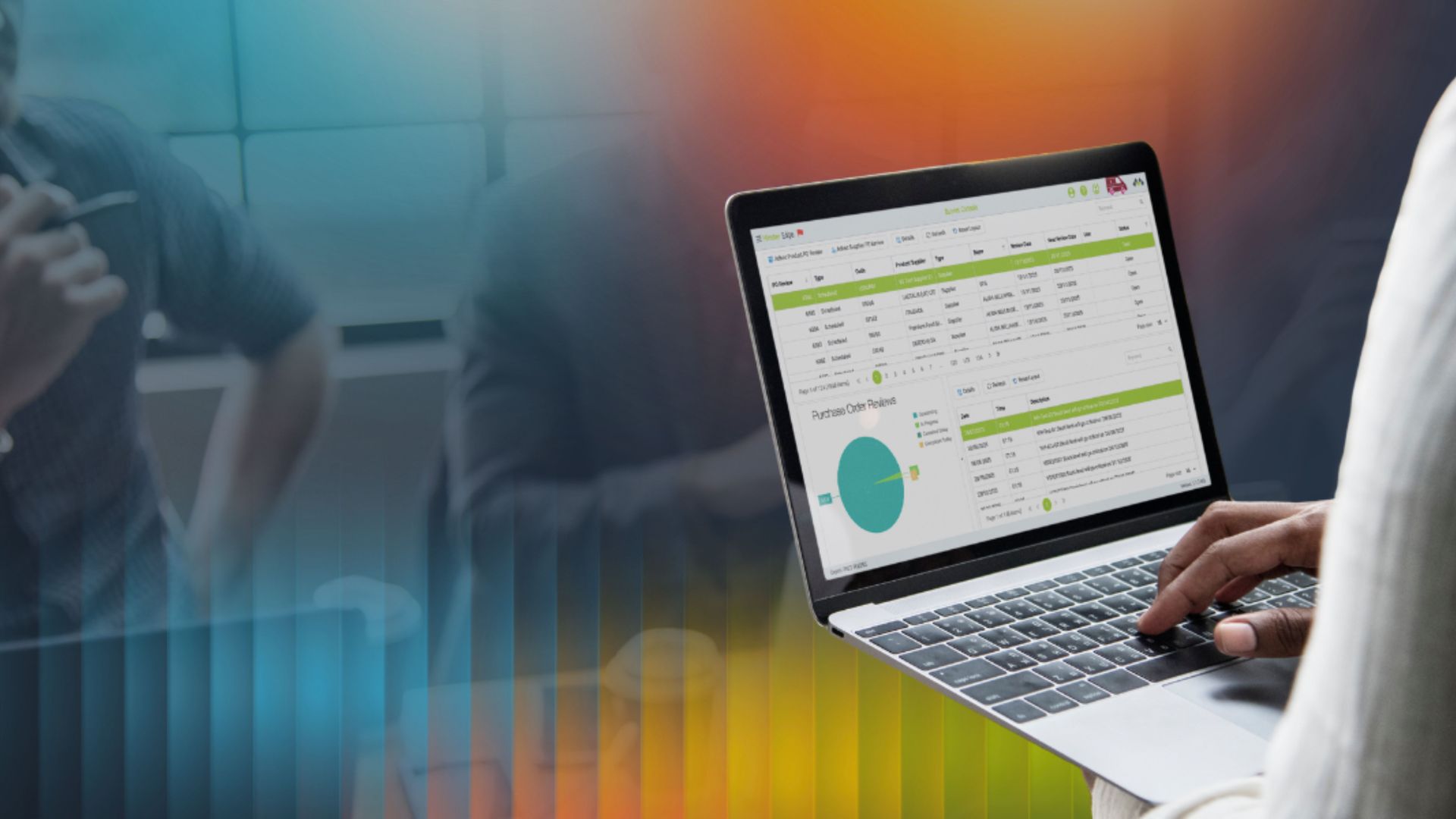
This is where good data and a good WMS can make a big difference. The WMS gives you real-time visibility into the status and location of all your items – a far cry from ledgers, spreadsheets and other traditional methods.

But that's not the best part. A modern WMS also lets you set a data-backed threshold for reordering. This significantly reduces human error and saves time – and this is true whether you're in charge of replenishing stock or you're in a VMI arrangement with a supplier.
2. Picking paths and space utilisation
A warehouse is like a city. No matter how simple the original plan, it has a way of becoming crowded, chaotic and sprawling.
Of course, your instincts and observations can help you tame the jungle. But good data can make a huge difference, too.
This is because a WMS will impartially spot picking paths that take longer than necessary and SKUs that take up too much space.
This data is easy to access and easy to understand. It can then be put to work as you rethink your warehouse layout and group frequently ordered items together.
3. Improving accuracy
Mispicks aren't just frustrating for managers. They have real-world consequences, whether that's the customer asking for a refund or saying unkind things about you online.
Picking accuracy depends on your staff's capabilities – and this in turn depends on training, management and workplace culture. But accuracy can also be improved with good data.
That's because the kind of real-time data offered by a WMS reduces reliance on manual entry and the mistakes that come with it.
An illustrative example is voice picking. If you integrate your WMS with a voice picking headset, your picking process is built around hands-free, eyes-up verbal commands. This is a clear step up from staff walking around with a notepad and pen in one hand and a trolley in the other.
4. Predictive maintenance
In a warehouse, maintenance has to be regular and scheduled. The alternative is to only act when there's an emergency – an attitude that leads to disruption and financial loss.
That said, knowing when to schedule maintenance is a tricky question. Sure, you can follow manufacturer guidance. But the schedule is yours – and if you get it wrong, you could be looking at unnecessary downtime.
This is another area where a cloud-based WMS can help. Many offerings carry out predictive maintenance, collecting real-time equipment data and automatically scheduling maintenance.
A WMS alone can't achieve this. It needs to be integrated with IoT sensors that record vibrations, temperature and other key variables.
Is it worth it? It all depends on the complexity of the equipment you use. If, however, you're battling with regular disruptions due to equipment failure, it could be worth investigating.
Perhaps most importantly of all, it can turn a reactive attitude into a proactive one – and it can extend the shelf life of an important piece of equipment, too.
How can technology and automation help?
Data has been collected manually for centuries. But this traditional method has one fatal flaw: human error.
Humans get tired. They get distracted. They get demotivated. All of these things can lead them to make errors when inputting data. And when data is scrappy or plain wrong, it becomes more difficult to make good decisions.
That's why so many warehouse-based businesses choose to invest in a WMS. It provides a "single version of the truth" at all stages of the warehouse process – from receiving stock to storage, from picking to dispatch.
That's before you get to the valuable role predictive analytics can play. This harnesses artificial intelligence to make calculations that humans struggle to complete quickly.
We're not suggesting that a WMS is the only tool you need to make good decisions. You also need skilled personnel and strategic thinking. But as a single source of good data, it can make a positive difference to your warehouse operations.
Are you looking for highly capable WMS software solutions to fuel data-driven decision-making? Book a demo with Minster WMS today to find out how our CORE and EDGE systems can unlock end-to-end visibility of all your warehouse operations.