


The benefits of managing your warehouse through SaaS
Find out how managing your warehouse through SaaS can improve the cost-effectiveness, scalability and accessibility of your operations.

One of the strangest things about being alive in the 2020s is the prevalence of extremely sophisticated tech.
Of course, being surrounded by tech you don't quite understand is nothing new. We doubt whether the majority of filmgoers in the early 20th century understood the science behind the projector.
But the science behind the projector pales in comparison to the recondite, rarefied, recherché world of cloud computing and its close cousin, SaaS.
Next time you have an hour to kill, pop into your nearest town centre and ask everyone you meet if they've heard of SaaS. We strongly suspect the nos will far outweigh the yeses.
Yet SaaS – short for "software as a service" – is ubiquitous in so many of our lives. It essentially refers to any software that's licensed on a subscription basis and hosted on the internet.
Watching a show on Netflix? SaaS. Sending an email on Gmail? SaaS. Inputting data on Salesforce? You get the picture.
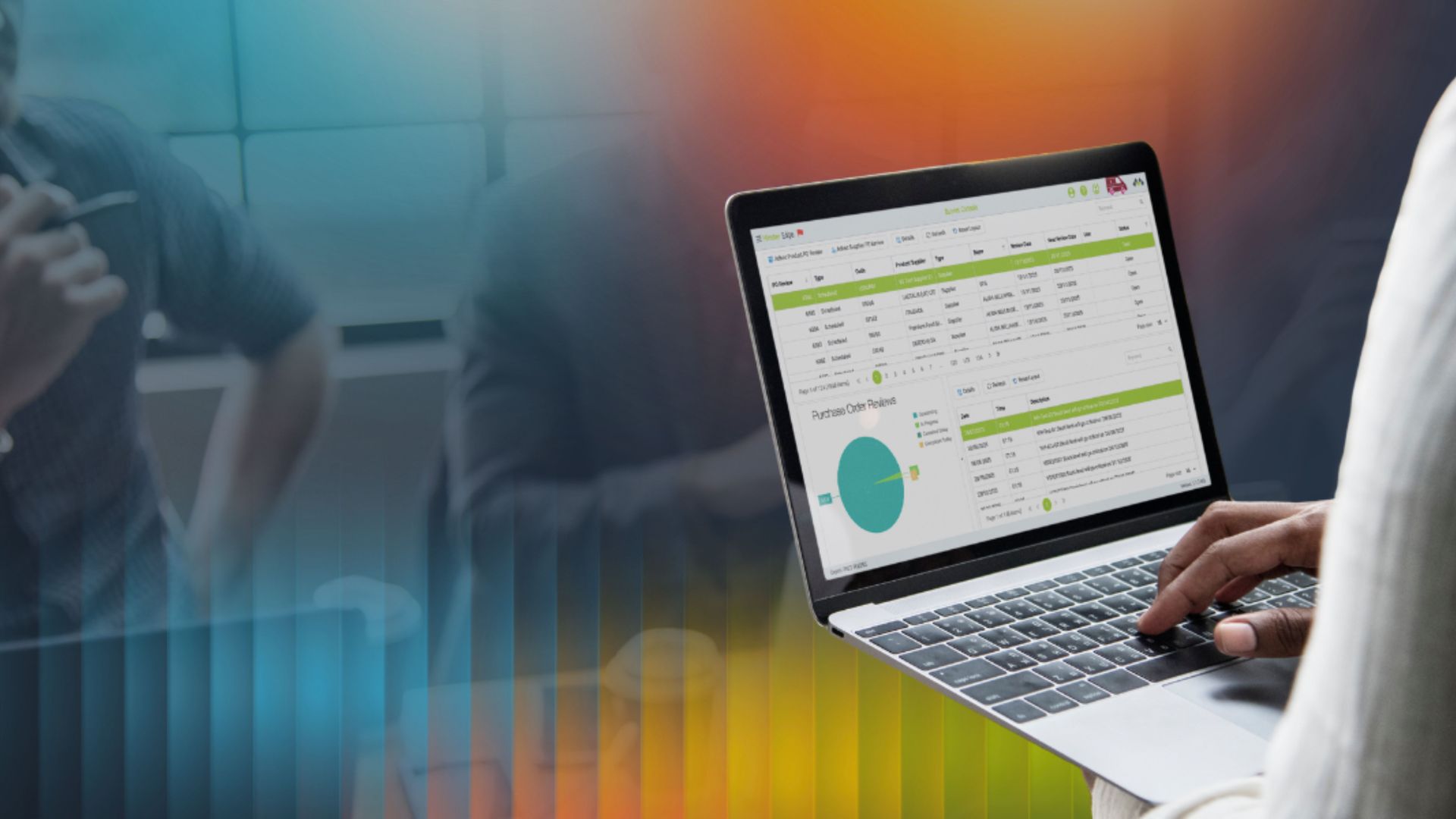
And increasingly, warehouses are managed using SaaS solutions – the kind we offer right here at Minster WMS. These cloud-based warehouse management systems provide real-time visibility into all aspects of your warehouse operations.
The benefits speak for themselves – but before we let them do the talking, let's make sure we're on the same page about SaaS. What is it, exactly, and how does it work?
What is SaaS?
SaaS is a cloud computing model where software is licensed on a subscription basis, hosted by a provider and accessed over the internet.
Too long, didn't read? If you need an internet connection to use a piece of software, you're using SaaS.
In the workplace, commonly used SaaS solutions include the Google Workspace suite (Docs, Sheets and Gmail), Slack, Zoom, Canva, Salesforce and Shopify.
Using SaaS isn't that different from getting your power from an energy supplier. You pay a recurring fee, and they handle infrastructure, maintenance and updates.
How can you manage your warehouse with SaaS?

Every warehouse has a management system of some kind. It might consist of pen and paper, spreadsheets or a bit of both.
Increasingly, however, warehouse management systems take the form of cloud-based software, replacing on-premises hardware.
Like all SaaS solutions, these are licensed on a subscription basis (rather than paid for outright), are hosted by a provider and are accessed online. They cut IT costs, are automatically updated and can be scaled quickly and easily.
In the case of warehouse management, SaaS solutions cover a lot of ground. They allow for real-time inventory tracking, automated order fulfilment and centralised control over every aspect of the fulfilment process.
They can be seamlessly integrated with ERPs and other pieces of software. What's more, users can generate powerful analytics for better decision-making with just a few clicks of the mouse.
Visibility – any time, anywhere
Stock levels, locations and movements can be tracked instantly across multiple warehouses. And because the software is cloud-based, it can be accessed anywhere that has a working internet connection. This makes it a shoo-in for companies working on a remote or hybrid basis.
This granular level of visibility has many benefits. Above all, however, it lets you avoid stock-outs and over-stocking by showing you what's there right now – not what could be there but hasn't been thoroughly audited and updated for a week or two.
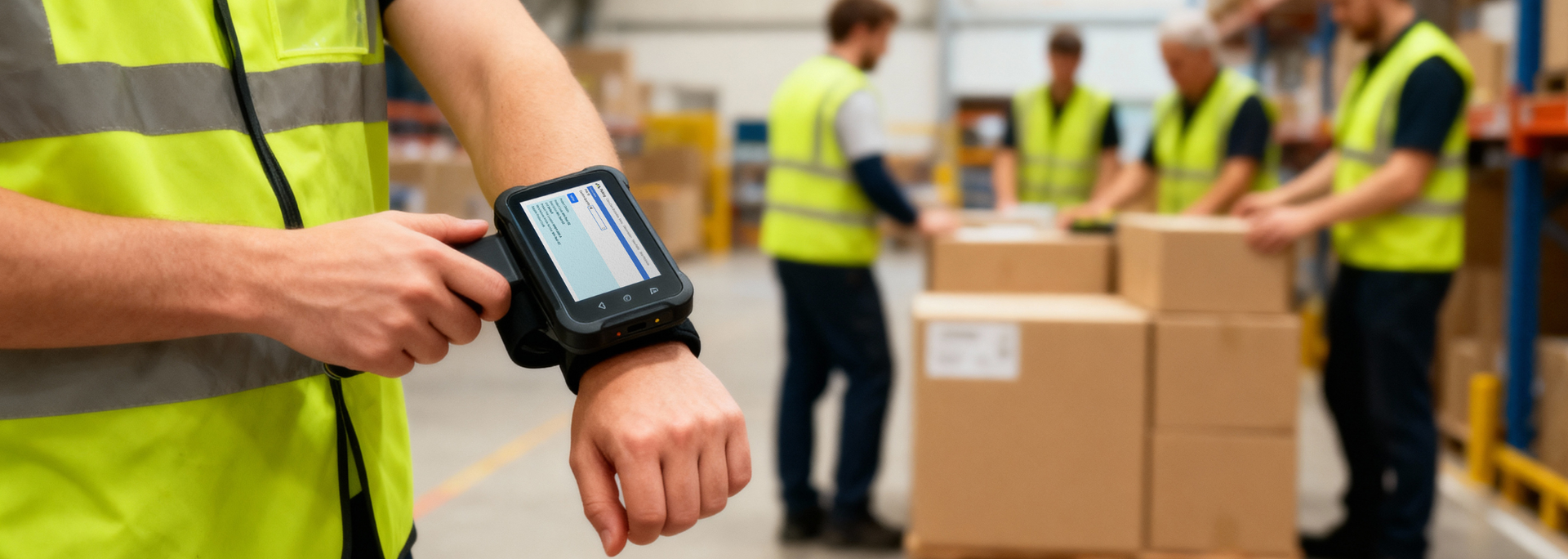
Order fulfilment is automated, streamlining the process at all stages. Packing and shipping statuses are updated in real time. And with our solutions, voice picking ensures hands-free efficiency and near-perfect accuracy.
Data, data, data
It's a truism to say that business decisions should be driven by data, not guesswork. A SaaS-based WMS supports this by furnishing you with actionable insights. And like all aspects of a cloud-based WMS, it's fast – no hanging around while a third party draws conclusions for you at great expense.

A warehouse is a many-legged beast – and all legs need to be flexible and strong. A SaaS-based WMS helps you achieve this by easily connecting with other business systems, such as your ERP, any eCommerce platforms you use and any POS systems. Data flows unhindered – something your customers will feel as well as you.
And because a cloud-based WMS is built around a single dashboard, all of this juicy, practical data is available at your fingertips. Whether you want to keep track of receiving, put-away, picking or shipping, the data you need can be accessed in seconds from any authorised device.
How does SaaS warehouse management work?
SaaS warehouse management has much in common with other kinds of SaaS.
It's cloud-hosted, meaning that the software and data live on the provider's servers – not yours. You pay for them to keep your data in a secure, easily accessible online environment.
It's subscription-based, meaning you pay a recurring monthly or annual fee rather than a high upfront cost for hardware and licenses. For an investment as big as a warehouse management system, this can help you budget effectively.
The software itself can be accessed via a web browser or mobile app from anywhere with internet. It doesn't matter whether you're working from home, in the warehouse itself or in transit. If you've got an internet connection and login details, you're in.
Finally, the vendor handles all software updates, maintenance and security. This frees you up to focus on all the other things that are going to let your business flourish.
What are the advantages of managing your warehouse with SaaS?
In our opinion, there are four key advantages of managing your warehouse with SaaS: its cost-effective pay-what-you-use subscription model, its easy scalability, its real-time agility and its remote accessibility.
Want to unlock these benefits right away and start enjoying real-time, end-to-end visibility of your warehouse operations? With CORE, our shelf-ready
SaaS warehouse management system, you can be up and running in 24 hours or less.
Book a demo with our UK team today to see how it can make your warehouse work harder.