Warehouse drones: are they the future of inventory management?
Warehouse drones can automate inventory counting and reach stock humans struggle to access. But are they the future?

Drones have spent the last few years finding increasingly inventive ways to earn their keep.
They film weddings, inspect roofs, survey farmland and – depending on where you live – occasionally drop parcels on people's lawns.
Now they're finding work in warehouses.
Inventory drones fly through warehouse aisles and collect information about the stock sitting on racks. Instead of sending a staff member up on a lift to scan a pallet at height, you send a small flying robot.
It's an appealing idea, especially for warehouses where inventory counting is repetitive, time-consuming and difficult.
But are drones genuinely the future of inventory management? Or are they another clever piece of warehouse technology that's useful only in the right setting?
Let's take a closer look.
What are warehouse drones?
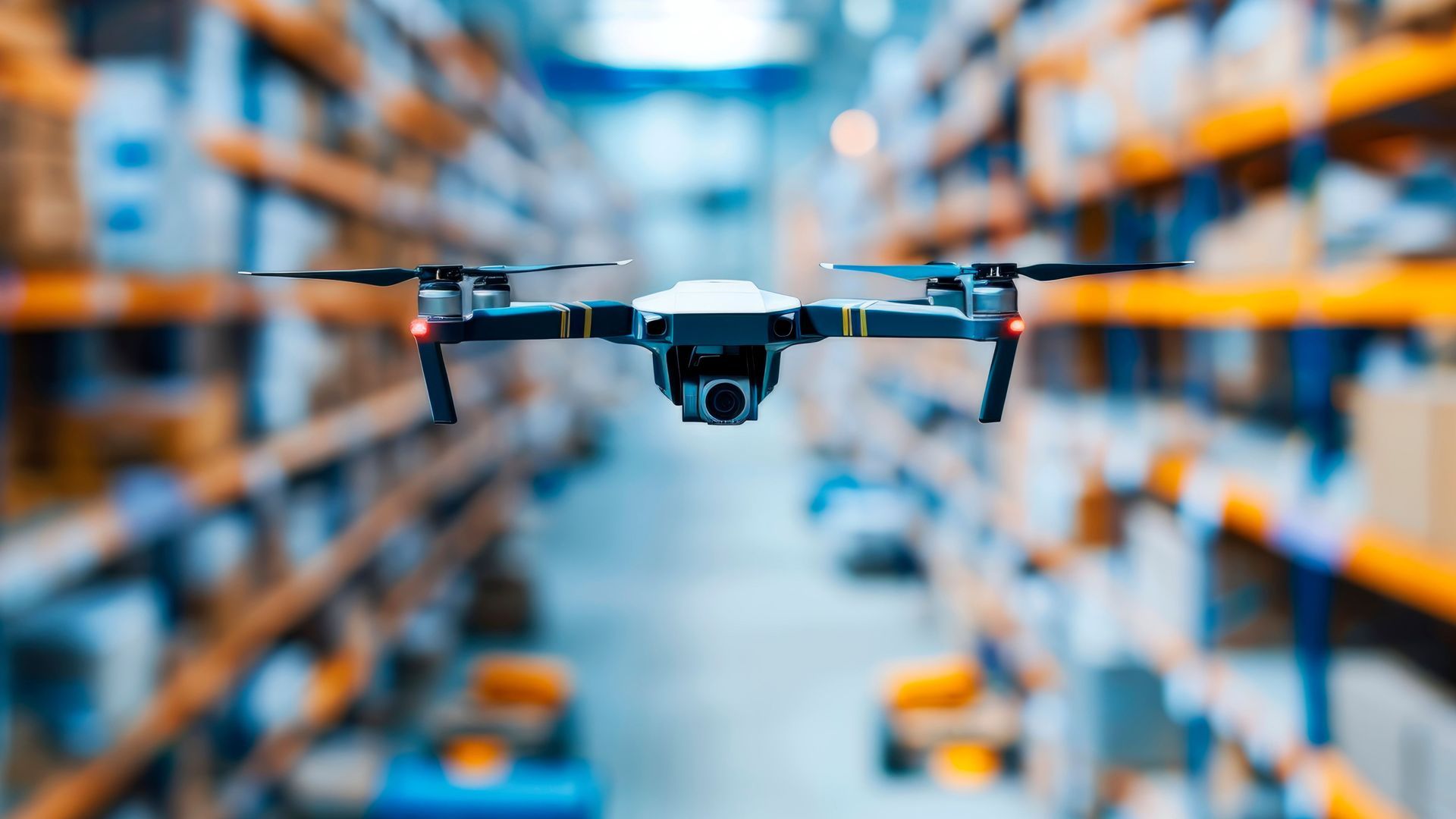
Warehouse drones are unmanned aerial vehicles designed for indoor use.
Unlike delivery drones, they don't generally move products from A to B. Their main job is to collect information.
Equipped with cameras and other sensors, warehouse drones can fly along aisles and capture information from pallet labels, barcodes and storage locations. Depending on the system, image-recognition software may also identify empty locations, count cases or flag visible damage.
The result is essentially a flying inventory scanner.
Some systems are manually piloted. Others can navigate warehouse aisles autonomously, following pre-planned routes and collecting inventory data without somebody steering the drone throughout the flight.
How do warehouse drones work?
Indoor drones face one obvious problem: warehouses don't have GPS in the way outdoor drones do.
That's why autonomous systems use other methods to understand where they are. These can include onboard cameras, sensors, LiDAR and visual markers installed around the warehouse.
As the drone moves along the racking, it captures images of pallet positions and labels.
Software then interprets that information and compares it with the warehouse's existing inventory records. If the drone finds a pallet where the system says there should be an empty location – or finds nothing where a pallet should be – the discrepancy can be flagged for investigation.
Importantly, the drone isn't necessarily replacing the warehouse management system (WMS).
Think of it more as an additional source of inventory data. The drone observes what's physically sitting in the warehouse. The WMS maintains the wider record of stock, locations, orders and warehouse activity.

What can warehouse drones be used for?
Cycle counting
Cycle counting is the clearest use case for warehouse drones. It involves checking sections of warehouse inventory regularly rather than shutting everything down for one enormous annual stocktake.
Drones can automate much of the physical scanning involved. Instead of a worker travelling from location to location with a handheld scanner, a drone can move along the racking and capture the required information.
That opens the door to more frequent counting – and potentially to finding discrepancies much sooner.
Checking high-level storage
High racking is another obvious opportunity.
Traditionally, checking a pallet stored several metres above ground might require a forklift, order picker or other access equipment. However, a drone can fly to the same location without somebody having to travel upwards with it.
DHL identifies high-level inventory counting as one of the strongest cases for warehouse drones, particularly where manual checking is expensive or time-consuming.
Identifying misplaced inventory
Inventory problems aren't always about quantities. Sometimes the stock exists but is simply in the wrong place.
Drone systems can compare the locations they observe with inventory records, helping teams identify misplaced pallets or unexpected empty locations.
And that's important. A pallet nobody can find isn't much more useful than a pallet you don't have.
What are the benefits of warehouse drones?
The most obvious benefit is time.
Manual inventory counting involves a staff member travelling through the warehouse, locating stock and recording what they find. In high-bay environments, that may also involve materials handling equipment.
Automating the physical scanning frees staff to concentrate on exceptions and other warehouse work rather than simply collecting data.
There's also the possibility of checking inventory more frequently.
A traditional count gives you an accurate picture at a particular moment. Unfortunately, the warehouse starts changing again almost immediately afterwards.
If automated systems can scan locations regularly, managers get a fresher picture of what's really on the shelves.
Safety is another consideration. Removing some of the need for employees to work at height can reduce exposure to one of the less convenient parts of inventory counting.
Finally, cameras can potentially capture more than a barcode alone. Current commercial systems can combine location and identification data with photographs and, in some cases, information about occupancy, quantities or visible damage.
What are the drawbacks?

Warehouse drones aren't about to conquer every stockroom in Britain.
For starters, the physical environment matters.
Inventory drones make most sense where they have clear aisles to fly through and labels or stock positions they can reliably observe. A tightly packed, highly irregular warehouse may present a very different challenge than rows of neatly palletised racking.
They also have to coexist safely with people, forklifts and other warehouse equipment. Some current systems handle this by controlling access to an aisle while the drone is flying rather than simply letting it weave freely through heavy traffic.
Battery life, charging, network connectivity and ongoing maintenance also need consideration.
And then there's integration.
Collecting inventory data is useful. But its real value comes when you can compare that information with the systems you already use to manage warehouse stock.
That doesn't mean every drone needs to speak directly to your WMS. The drone platform may have its own software and dashboard, with information exchanged through APIs, files or another integration layer.
Either way, compatibility needs to be established before investment rather than assumed afterwards.
Are warehouse drones the future of inventory management?
They're probably part of it.
Warehouse drones solve a genuine problem: physically checking large amounts of inventory is labour-intensive, particularly when stock is stored high above the warehouse floor.
Commercial systems already automate cycle counting in live warehouse environments, so this isn't technology waiting patiently for the future to arrive.
However, drones are unlikely to become the universal answer to inventory visibility.
Ground-based scanning robots and cameras mounted on materials handling equipment are tackling many of the same problems. Different warehouse layouts will favour different technologies.
The more useful question, then, isn't whether every warehouse will one day contain drones. It's whether autonomous data capture can give warehouse managers a more accurate and up-to-date picture of their inventory.
On that front, the direction of travel looks pretty clear.
Building automation around the right WMS
Warehouse robotics and your WMS have different jobs.
A drone or its software captures information from the physical warehouse. Your WMS provides the wider operational picture – inventory records, locations, orders and warehouse workflows.
For larger businesses exploring technologies such as drones, the ability to adapt and integrate warehouse software can therefore become increasingly important.
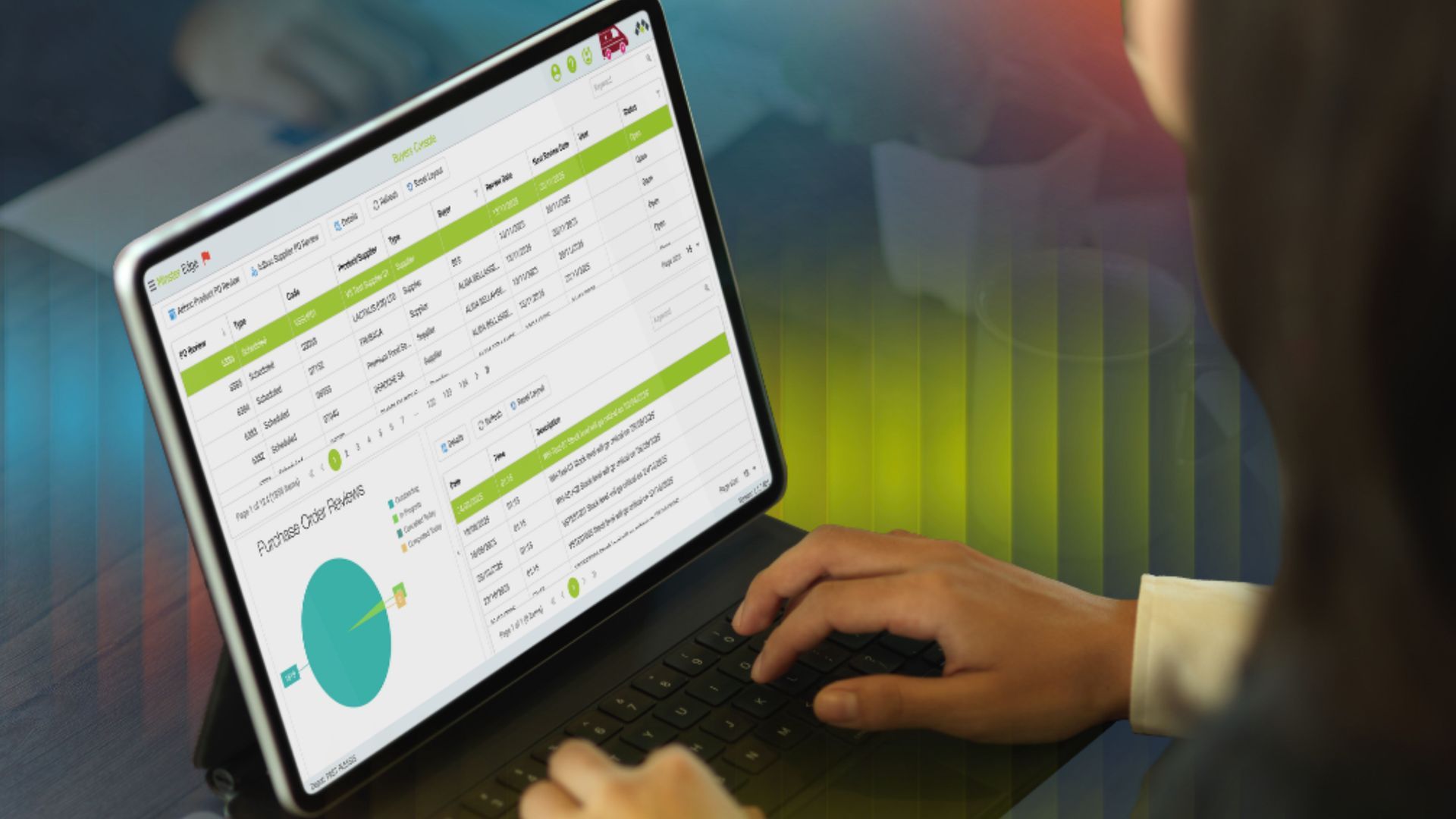
Minster WMS EDGE is our enterprise warehouse management system. Unlike our off-the-shelf CORE solution, EDGE can be customised in partnership with our UK development team, including by developing bespoke system integrations.
That doesn't mean every warehouse drone platform will connect to EDGE out of the box. Any integration would need to be assessed and developed according to the systems involved.
But if warehouse automation is part of your future plans, having a WMS designed to accommodate custom features and integrations gives you considerably more room to manoeuvre.

Explore EDGE to learn more about our customisable enterprise WMS, or speak to the Minster team about the technology ecosystem your warehouse needs to support.