What is voice picking technology?

Simon Edward • 2 January 2026

Share this article

Are you looking for ways to boost warehouse productivity and accuracy? Find out how voice picking technology can help.


Are you looking for ways to boost warehouse productivity and accuracy? Find out how voice picking technology can help.

Check the Wikipedia page for 27 September 1998, and you won't see any mention of warehouse management. It was on this day, however, that the way we do business changed forever.


Heald's Day & Nite Stores (now just Day & Nite) was then a chain of around 100 convenience stores. They were the first business to implement a fully voice-directed warehouse management system (WMS).


The benefits were clear to warehouse managers. Where once picking staff carried a clipboard, now they wore a hands-free headset. Where once they had to ensure accuracy themselves, they now ensured accuracy via voice commands from the WMS and their own voice confirmations.


This meant two things: increased productivity and increased accuracy.


Today, voice picking technology is typically integrated with a cloud-based WMS via Bluetooth. This means the information given to the picker is foolproof and up-to-date.


But why does accuracy matter? The answer lies, of course, in customer expectations.


Amazon changed the game in many ways. Most relevantly for warehouse management, however, they normalised super-fast delivery, forcing smaller businesses to keep up.


Your warehouse or distribution centre may never have the resources to go toe-to-toe with Amazon. But with voice picking technology, you can at least get the right products to the right customers at the right times. This maximises your chances of retaining customers.

But before we zoom in on these benefits – how does voice picking technology work, exactly?


How does voice picking technology work?

Picture the scene. Your warehouse stocks, let's say, hiking gear. An order comes in for a pair of crampons, a waterproof jacket and three pairs of thermal trousers (grey).


Before the advent of voice picking, the picking process would go something like this.

  1. The picker has the order information on a piece of paper, perhaps fixed to a clipboard. They read the first picking location.
  2. They push their trolley to picking location one.
  3. They check the quantity.
  4. They pick the items.
  5. They check the packing area destination.
  6. They take the items there.
  7. They tick off the tasks and move on to the next.

This is far from a foolish way of doing things. But it brings with it two problems. First, the picker isn't working at optimum productivity. Each time they execute a task, they have to look down to check the details – and if the items require two hands, they have to put the order information down.


And secondly, the picker is only human – and humans make mistakes, especially when stressed, tired or busy. These mistakes come back to bite the people at the top when the wrong order is dispatched, and a customer either trashes you online or decides to take their custom elsewhere.


Voice picking technology all but eliminates these problems. Instead of carrying a clipboard, the picker wears a headset. This is linked by Bluetooth to the warehouse management system – a system that's cloud-based and updated in real-time.


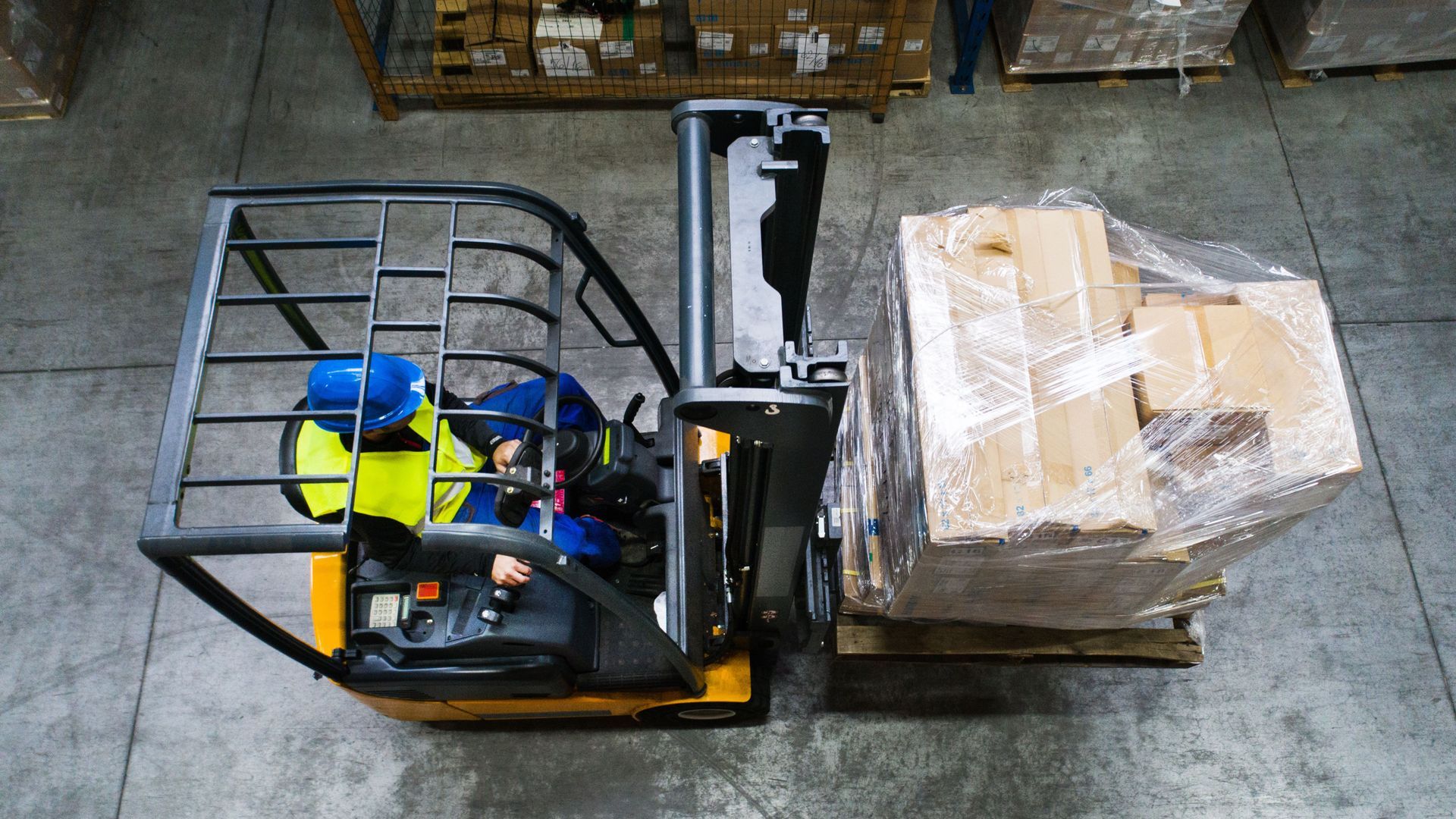
Picture of a warehouse worker using voice picking technology.

The system tells the picker where to go and how many items to pick. The picker confirms they've picked the right order from the right location through simple voice commands. Often, this is integrated with a barcode scanner.


You can see why this would drastically reduce the number of mistakes made on site. The picker is no longer doing double duty as a picker and a quality controller. Instead, they can focus on the core task at hand.


This can make a huge difference in any warehouse or distribution environment. But it's especially useful in complex environments with heavy inventory, diverse SKUs or cumbersome personal protective equipment (PPE).


Where is voice picking technology used?

Voice picking technology is used in a wide range of warehouses and distribution centres. It would be quicker to say which industries don't use it. Some key adopters, however, include eCommerce, food and beverages, healthcare, automotive and general retail.


What are the advantages of voice picking technology?

In our opinion, there are five key advantages of voice picking technology.

1. Productivity

Voice picking increases productivity. Freed from paper orders, pickers can move more quickly. This can increase the efficiency of your operations and help keep the customer satisfied.


2. Accuracy

Voice picking improves the overall accuracy of your warehouse operations – especially when integrated into a cloud-based WMS. Pickers are far less likely to mis-pick when orders come from a machine, and when each step is verbally confirmed.


3. Safety

Voice picking can make your warehouse a safer place to be. That's because the technology doesn't just free up workers' hands. It also means their eyes are up, increasing situational awareness and helping prevent accidents.


4. Fast onboarding

Voice picking streamlines the training process. It's the difference between a black cab driver learning every street in London and an Uber driver with GPS. Pickers get up to speed quickly thanks to simple, step-by-step verbal guidance. This makes onboarding quicker – and cheaper.

5. Integration

Voice picking technology is part of a wider approach to warehouse management – one that puts real-time visibility first. By letting the system take charge, you ensure your inventory is up-to-date and super-accurate. 


Voice picking doesn't work in every environment – if your warehouse pickers need to wear ear defenders, for instance. But nine times out of 10, it can help you become more productive, more accurate and more profitable.


How we can help

Here at Minster WMS, we provide companies in a range of industries with cloud-based warehouse management systems that include an integrated pick by voice system.


With our CORE and EDGE systems, you can unlock 99.98% picking accuracy – and be up and running within days or weeks, not months.


What's more, our solutions come backed with best-in-class technical support from our UK-based team. That means no call centres and no script – just real experts with real answers.


So, if you're looking for a highly capable WMS to increase productivity and efficiency, don't hesitate to book a demo with our UK team. We'd love to help you optimise your operations.

Recent Posts

The benefits of a modern cloud-based WMS are clear. But when is the best time to make the switch?
by Simon Edward • 23 November 2026
The benefits of a modern cloud-based WMS are clear. But when is the best time to make the switch?
Is your warehouse getting ready for peak season? Tick off tasks
by Simon Edward • 20 November 2026
Is your warehouse getting ready for peak season? Tick off tasks with our practical planning checklist.
Is it time to outsource warehousing – or is it more trouble than it's worth?
by Simon Edward • 13 November 2026
Is it time to outsource warehousing – or is it more trouble than it's worth? Explore the pros and cons in our guide.
What is putaway in warehouse management, and why does it matter?
by Simon Edward • 9 November 2026
What is putaway in warehouse management, and why does it matter? Learn how optimising putaway can improve accuracy, space use and fulfilment.
Warehouse drones can automate inventory counting and reach stock humans struggle to access.
by Simon Edward • 6 November 2026
Warehouse drones can automate inventory counting and reach stock humans struggle to access. But are they the future?
How well is your warehouse really performing? Learn how to conduct a warehouse audit
by Simon Edward • 2 November 2026
How well is your warehouse really performing? Learn how to conduct a warehouse audit covering inventory, processes, technology, data and more.
Seasonal demand can make inventory planning a headache. Learn how to keep enough stock
by Simon Edward • 30 October 2026
Seasonal demand can make inventory planning a headache. Learn how to keep enough stock without wasting money on overstocking.
Today, goods are often brought to warehouse workers by robots and automated retrieval systems.
by Simon Edward • 23 October 2026
Today, goods are often brought to warehouse workers by robots and automated retrieval systems. Could a system like this work for you?
Is it time to upgrade your warehouse management system? Explore 10 telltale signs in our guide.
by Simon Edward • 21 October 2026
Is it time to upgrade your warehouse management system? Explore 10 telltale signs in our guide.
One of the under-sung benefits of a WMS is its capacity to reduce waste. Learn more
by Simon Edward • 21 October 2026
One of the under-sung benefits of a WMS is its capacity to reduce waste. Learn more in our industry guide.
Show More